
.jpg "Delta Maths: Understanding Change and Difference in Mathematics")
Mathematics provides many ways to describe quantities, relationships, movement, and change. One useful concept for expressing a difference between two values is represented by the Greek letter delta, written as Δ. In many mathematical contexts, delta represents a change, difference, or variation between an initial value and a final value. This idea becomes particularly important when students begin working with equations, graphs, algebra, geometry, calculus, statistics, and scientific calculations. Understanding delta maths can therefore make several advanced mathematical concepts easier to understand because the same basic idea of measuring change appears across different subjects.
The meaning of delta depends on the mathematical situation. In a simple equation, it may represent the difference between two numbers. In geometry, it can be connected with changes in measurements, while in calculus it can describe a small change in a variable. Students may also encounter delta when studying functions, rates of change, distance, time, or statistical differences. Learning how to interpret Δ correctly helps learners understand not only formulas but also the reasoning behind them.
What Does Delta Mean in Mathematics?
The Greek letter delta, Δ, is commonly used to represent a difference or change in a quantity. A simple way to understand it is to compare a starting value with an ending value. The general formula is:
Δx = x₂ − x₁
Here, x₁ represents the initial value and x₂ represents the final value. The result tells us how much the quantity has changed. If the final value is larger, the change is positive. If the final value is smaller, the change is negative.
For example, suppose a number changes from 15 to 23. The change is 23 − 15, which equals 8. Therefore, Δx is 8. If the number changes from 23 to 15, the change becomes 15 − 23, giving −8. This simple example demonstrates why the direction of change matters. A positive delta indicates an increase, while a negative delta usually indicates a decrease. In delta maths, this approach provides a foundation for understanding more complicated concepts involving variables and relationships.
Why Delta Is Important in Mathematics
The importance of delta comes from the fact that change is present throughout mathematics. Many real-world problems are not concerned only with an individual value. Instead, they ask how much something has increased, decreased, moved, or developed over a particular period.
For example, a student may need to determine how much a temperature changed during a day, how much a company’s revenue increased, or how far an object moved. Each situation involves comparing two values. Delta provides a compact mathematical way to describe that comparison.
The concept also prepares students for more advanced topics. When learners understand that Δ represents a change, they can more easily understand expressions involving Δx, Δy, and similar variables. These expressions appear when studying slopes, rates of change, functions, and calculus. Rather than memorizing symbols independently, students can recognize the common idea connecting them: measuring the difference between two states.
Delta in Algebra
Algebra frequently uses delta to describe differences between values. When two values of a variable are compared, delta can help identify the amount by which the variable has changed. This becomes especially useful when analyzing equations and functions.
Consider a function where the input changes from x₁ to x₂. The corresponding change in the input can be written as:
Δx = x₂ − x₁
Similarly, if the output changes from y₁ to y₂, the output difference can be written as:
Δy = y₂ − y₁
These two expressions become particularly useful when studying the relationship between variables. For instance, the slope of a straight line can be expressed as the change in y divided by the change in x:
Slope = Δy / Δx
This formula helps students understand that slope is not simply a number to calculate. It describes how one quantity changes compared with another. This is one reason delta maths concepts are valuable for building a strong foundation in algebra and coordinate geometry.
Delta and Graphs
Graphs provide a visual way to understand change. When a line moves from one point to another, the horizontal movement can represent Δx, while the vertical movement can represent Δy. Together, these measurements explain how the graph behaves between two points.
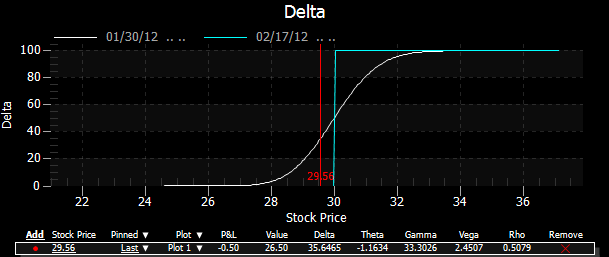
For example, imagine two points on a coordinate plane. If the first point is (2, 4) and the second point is (6, 12), the change in x is 6 − 2, which equals 4. The change in y is 12 − 4, which equals 8. The slope is therefore 8 divided by 4, giving 2.
This example demonstrates how delta connects numerical calculations with visual information. Instead of seeing a graph as only a collection of points and lines, students can use Δ values to analyze movement across the coordinate plane. This method is useful for interpreting linear equations, trends, and relationships between variables.
Delta in Geometry
Geometry also involves measuring changes in dimensions, angles, distances, and areas. Although delta is not limited to geometry, the symbol can be useful whenever a geometric measurement changes.
Suppose the length of a rectangle increases from 10 centimeters to 14 centimeters. The change in length is 4 centimeters. If another dimension also changes, students can compare the original and new measurements to understand how the shape has been altered.
Delta can also appear in discussions involving changes in angles or coordinates. When two positions are compared, the difference between their coordinates can help determine distance, direction, or movement. These ideas become increasingly useful in coordinate geometry and mathematical modeling.
Delta in Calculus
The concept becomes even more significant in calculus. Calculus focuses heavily on change, including how quantities change over time or in relation to other variables. Expressions such as Δx and Δy are commonly used when introducing the idea of a derivative.
A derivative can be understood initially through the ratio:
Δy / Δx
This represents the average rate of change between two points. As the interval between the points becomes smaller, calculus develops this idea toward the instantaneous rate of change.
For example, if a vehicle travels different distances over different periods, the average speed can be calculated by comparing the change in distance with the change in time. In mathematical notation, this relationship can be expressed as Δdistance divided by Δtime.
Understanding the basic meaning of delta therefore makes the transition to calculus less intimidating. Students can see that calculus does not introduce change from nowhere; instead, it develops the familiar idea of comparing quantities in increasingly precise ways.
Delta and Rates of Change
Rates of change are another important application. A rate describes how quickly one quantity changes relative to another. Common examples include speed, population growth, production rates, and changes in temperature.
Suppose a cyclist travels from 20 kilometers to 50 kilometers along a route. The change in distance is 30 kilometers. If this happens over two hours, the average rate of change is 15 kilometers per hour.
The calculation depends on identifying the difference between the final and initial measurements. This makes delta particularly useful in practical mathematics. Students can apply the same reasoning to financial growth, business statistics, scientific measurements, and everyday comparisons.
In this sense, delta maths is not simply about learning another mathematical symbol. It is about developing a habit of thinking in terms of change, comparison, and relationships between quantities.
Positive and Negative Delta Values
Delta values can be positive, negative, or sometimes zero. Understanding the sign is important because it communicates the direction of change.
A positive delta generally means that the final value is greater than the initial value. For example, a temperature increasing from 18°C to 25°C produces a change of +7°C.
A negative delta means that the final value is smaller than the initial value. If the temperature decreases from 25°C to 18°C, the change is −7°C.
A delta of zero means there has been no change. If a quantity begins at 50 and ends at 50, then the difference between the two values is zero.
Students should therefore avoid treating delta as merely an absolute difference. The sign can contain meaningful information about whether a quantity increased or decreased.
Common Mistakes When Using Delta
One common mistake is reversing the order of the values. The standard change calculation is generally final value minus initial value. Writing the initial value first and subtracting the final value can reverse the sign and produce an incorrect interpretation.
Another mistake is ignoring the units. If Δx represents a change in distance, the answer should normally retain the appropriate distance unit. Similarly, a change in time should be expressed in a time unit.
Students may also confuse delta with an ordinary variable. While Δ is technically a symbol, it commonly communicates a specific mathematical idea: a difference or change. Its interpretation still depends on the context in which it appears.
A further problem occurs when students memorize formulas without understanding what each part means. A better strategy is to ask three questions: What is the starting value? What is the ending value? What quantity has changed? These questions make many delta-based calculations easier to organize.
How to Learn Delta Concepts Effectively
The best way to learn delta concepts is through progressive practice. Begin with simple numerical differences before moving toward algebraic expressions. Once basic subtraction is comfortable, practice calculating Δx and Δy from tables, graphs, and coordinate points.
Next, connect these calculations to slope and rate-of-change problems. This helps demonstrate why the concept matters rather than presenting it as an isolated symbol.

Visual learning can also be effective. On a graph, mark two points and identify the horizontal and vertical changes between them. Then calculate the corresponding slope. Repeating this exercise with different points helps build an intuitive understanding of how mathematical quantities change.
Finally, apply the concept to real situations. Temperature, speed, distance, money, population, and measurements all provide opportunities to practice differences and changes. Regular application can make the concept much easier to remember.
Practical Applications of Delta
The idea of change has applications far beyond classroom exercises. In finance, delta-style calculations can help compare changes in prices, revenue, expenses, and investments. In science, researchers compare measurements collected at different times or under different conditions. In engineering, changes in position, pressure, temperature, and other variables can be analyzed mathematically.
Technology and data analysis also depend heavily on comparisons between values. Charts often show how a measurement changes over time, while mathematical models use differences to identify trends.
Even simple daily decisions involve this reasoning. Comparing yesterday’s spending with today’s spending, measuring a change in body weight, or calculating how much time remains before an appointment all involve differences between quantities.
Because of these applications, delta maths can be viewed as a practical way of understanding numerical change rather than merely a theoretical mathematical topic.
Conclusion
Delta represents one of the most useful ideas for understanding change in mathematics. From simple subtraction to algebra, graphs, geometry, rates of change, and calculus, the Greek symbol Δ provides a concise way to describe differences between values. Learning how to identify initial and final values, calculate the difference correctly, and interpret positive or negative results gives students a strong foundation for more advanced mathematical topics. The real value of the concept is its flexibility. Whether a learner is studying equations, analyzing a graph, calculating a rate, or exploring calculus, the same basic principle remains relevant: compare one state with another and determine what changed. With consistent practice and real-world examples, delta maths becomes easier to understand and apply across many areas of mathematics.

.jpg&description=Explore delta maths, its meaning, formulas, uses, and practical applications for understanding change and differences in mathematics.)