
Introduction
Mathematics is an important subject that develops logical thinking, problem-solving abilities, analytical skills, and decision-making capabilities. From basic arithmetic to advanced algebra, geometry, calculus, and statistics, mathematical concepts are connected to many aspects of education and everyday life. However, students often find mathematics challenging because different topics require different approaches, formulas, and problem-solving techniques. Understanding a mathematical concept is not always easy, especially when classroom explanations move quickly or students have limited opportunities to practise difficult questions. With the growing use of digital learning resources, students now have more opportunities to explore mathematical concepts independently and improve their academic performance.
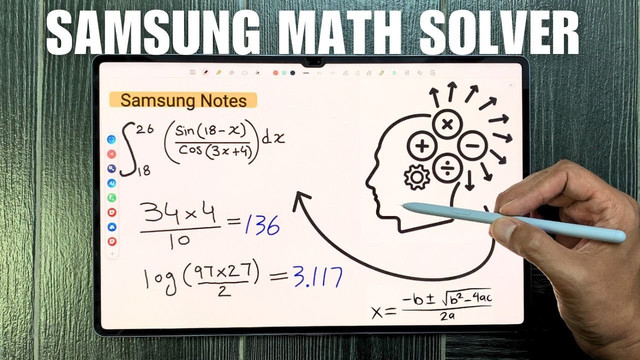
A Maths Solver can make learning mathematics more accessible by helping students understand different types of mathematical problems. These digital tools are designed to process mathematical questions and provide solutions through different calculation methods. Depending on the platform, students may receive step-by-step explanations, formula suggestions, graphical representations, and alternative approaches to solving a question. Such features can help learners understand not only the final answer but also the reasoning behind the calculation. When used correctly, these resources can become valuable learning companions for school students, college learners, and individuals who want to strengthen their mathematical knowledge.
Modern education increasingly combines traditional classroom teaching with digital learning methods. Students can use online mathematical resources to revise lessons, practise questions, identify mistakes, and develop confidence in challenging topics. However, technology should support independent thinking rather than replace it. The most effective learning approach involves understanding concepts, attempting problems independently, and using digital assistance to review the solution.
Understanding the Role of Digital Mathematics Tools
Digital mathematics tools have changed how students approach numerical problems and complicated calculations. Traditionally, learners depended mainly on textbooks, classroom notes, teachers, and calculators to understand mathematical concepts. Although these resources remain important, digital platforms provide additional learning opportunities through interactive explanations and automated calculations. Students can enter questions, explore possible solutions, and compare different methods without waiting for the next classroom session.
One major advantage of these platforms is their ability to make mathematical learning more flexible. Students can practise whenever they have time, whether they are preparing for examinations, completing homework, or revising previously studied chapters. They can also revisit difficult questions multiple times until the underlying concept becomes clear. This flexibility is particularly useful for learners who need additional practice outside regular classroom hours.
Another important feature is the variety of mathematical subjects supported by modern educational platforms. Depending on the available functionality, students may find assistance with arithmetic, algebra, equations, geometry, trigonometry, calculus, and statistics. Having access to different types of learning support in one place can make revision more organised and convenient.
How Maths Solver Supports Better Mathematical Understanding
Mathematical understanding requires more than memorising formulas or copying answers. Students need to recognise patterns, understand mathematical relationships, select suitable methods, and apply concepts to unfamiliar questions. A Maths Solver can support this process by presenting solutions in an organised manner and helping learners identify the individual steps involved in a calculation.
For example, consider a student trying to solve a quadratic equation. The learner may know that the equation follows a particular mathematical structure but might struggle to decide which method should be used. A digital solving tool can demonstrate how to identify coefficients, apply the quadratic formula, substitute values, and calculate the possible roots. By reviewing these steps, students can understand how the formula works instead of simply memorising the final result.
These tools can also help students recognise calculation errors. Sometimes, learners understand the correct method but make mistakes while simplifying expressions, applying signs, or performing arithmetic operations. Reviewing an explained solution can help them identify where their reasoning went wrong. Repeated practice with similar questions gradually improves accuracy and develops a stronger understanding of mathematical procedures.
Learning Through Step-by-Step Explanations
Step-by-step explanations are particularly valuable for students who struggle with complicated calculations. A final numerical answer does not always explain why a particular method works. Detailed solutions can break a lengthy problem into smaller stages, allowing learners to understand each mathematical operation separately.
For instance, solving a system of linear equations may involve substitution, elimination, or graphical methods. When students see how each approach is applied, they can compare the methods and understand when one technique may be more convenient than another. This approach encourages conceptual learning and makes it easier to apply previously learned knowledge to different questions.
Important Mathematical Subjects Students Can Practise
Mathematics includes several interconnected branches, each requiring specific knowledge and problem-solving strategies. Digital learning resources can provide useful support across these subjects, particularly when students need additional explanations or practice questions.
Algebra is one of the most important areas of school mathematics. It introduces variables, expressions, equations, inequalities, and mathematical relationships. Students can use solving tools to understand how to simplify expressions, factorise polynomials, and calculate unknown values. Practising these concepts regularly helps develop the foundation required for higher-level mathematics.
Geometry focuses on shapes, angles, lines, measurements, areas, and volumes. Students sometimes find geometrical problems difficult because they need to understand both visual information and mathematical formulas. Interactive diagrams and graphical explanations can help learners understand relationships between different geometrical elements.
Trigonometry introduces the relationships between angles and sides of triangles. Concepts such as sine, cosine, tangent, and trigonometric identities are essential for advanced mathematics and several scientific applications. Students can benefit from guided calculations that demonstrate how these relationships are used in different problems.
Calculus involves limits, derivatives, and integrals. These topics can appear challenging because they require an understanding of mathematical changes and functions. Digital explanations can help learners review individual operations and practise the application of differentiation and integration rules.
Statistics helps students understand numerical information through averages, probability, distributions, and data interpretation. Solving statistical questions with guided explanations can improve numerical reasoning and help students understand how mathematical information is applied in practical situations.
Benefits of Using Mathematical Learning Platforms
Digital mathematical resources offer several benefits when combined with regular study and classroom instruction. Their usefulness depends on the quality of explanations, the student’s learning habits, and the accuracy of the platform.
One important benefit is improved learning flexibility. Students do not always understand every topic during a classroom lesson. Some concepts require additional time and repeated explanations. Online solving resources allow learners to review difficult questions at their own pace and revisit important calculations whenever necessary.
Another benefit is increased practice opportunities. Mathematics requires consistent problem-solving experience, and students often improve through repeated exposure to different question patterns. Digital platforms can make it easier to experiment with alternative methods and understand how small changes in a question affect its solution.
The following table highlights some common advantages of using digital mathematics resources.
| Learning area | How digital tools help | Academic benefit |
|---|---|---|
| Problem-solving | Explains calculation steps | Better understanding |
| Formula application | Demonstrates formula usage | Improved accuracy |
| Revision | Supports repeated practice | Stronger preparation |
| Error identification | Helps review incorrect steps | Fewer calculation mistakes |
| Concept development | Presents alternative methods | Better logical thinking |
| Time management | Provides quick calculation support | More organised learning |
These advantages demonstrate that digital resources can contribute to a more effective learning environment. However, students should remember that completing calculations quickly does not automatically mean they have mastered the subject. Understanding the reasoning behind each answer remains the most important objective.
Developing Independent Learning Habits with Technology
Independent learning is an essential part of academic development. Students who take responsibility for understanding their subjects are often better prepared to handle unfamiliar questions and examination challenges. Digital mathematics resources can encourage this habit by allowing learners to explore questions beyond their classroom assignments.
Using a Maths Solver as a learning assistant can help students review mathematical concepts after attempting problems independently. Instead of immediately searching for an answer, learners should first understand the question, identify the relevant formula, and try to complete the calculation. Once they have attempted the problem, they can compare their working with the available explanation.
This method creates an active learning process. Students become involved in identifying mistakes, evaluating different approaches, and understanding why a particular method produces the correct result. Over time, they can become more confident in solving similar questions without assistance.
Independent learning also encourages curiosity. When students understand a basic mathematical concept, they may become interested in exploring more challenging examples. They can investigate alternative formulas, examine graphical representations, and practise questions that extend beyond their regular homework.
How to Use Maths Solver Effectively for Academic Improvement
Getting meaningful results from digital learning tools requires a structured approach. Students should avoid treating these platforms as shortcuts for completing homework. Instead, they should use them to improve their knowledge, strengthen weak areas, and develop better problem-solving habits.
A practical learning routine can include the following activities:
-
Attempt the question independently: Read the problem carefully and identify the mathematical concept involved before seeking assistance.
-
Review the explanation: Examine each calculation step and understand why a particular formula or operation is being used.
-
Practise similar questions: Solve additional problems based on the same concept to strengthen understanding.
-
Maintain a mistake record: Write down common errors and revisit them during revision sessions.
Following this routine can make mathematical practice more productive. Students should also create a regular study schedule instead of depending entirely on last-minute examination preparation. Even a short daily practice session can help improve calculation speed, conceptual clarity, and confidence.
The Importance of Accuracy and Responsible Technology Use
Although digital mathematical tools can be useful, students should understand that automated systems are not always perfect. Some platforms may misunderstand handwritten questions, interpret mathematical symbols incorrectly, or produce incomplete explanations. Complex questions may also require additional assumptions that are not clearly mentioned in the original problem.
Therefore, students should develop the habit of checking solutions rather than accepting every displayed result without evaluation. They can verify calculations using textbooks, classroom notes, alternative solving methods, or guidance from teachers. This is particularly important when working with advanced equations or multi-step mathematical problems.
Responsible use of technology also involves academic honesty. Students should follow their school’s or college’s rules regarding digital assistance in assignments, examinations, and assessments. Using a mathematical platform to understand a difficult topic is different from submitting generated answers without understanding the work. Genuine academic improvement comes from developing knowledge and applying it independently.
Comparing Traditional Learning and Digital Mathematics Assistance
Traditional classroom education and digital mathematical resources serve different but complementary purposes. Classroom learning provides structured instruction, personal guidance, discussions, and opportunities to ask questions. Teachers can understand students’ difficulties and adjust their explanations according to individual learning requirements.
Digital resources provide additional flexibility by allowing learners to practise independently and access explanations whenever needed. They can also offer immediate calculation support, making them useful for reviewing homework and checking numerical results. However, they may not fully understand a student’s learning difficulties or provide the same level of personal guidance as an experienced teacher.
The following comparison explains how both approaches contribute to mathematical education.
| Learning factor | Traditional learning | Digital assistance |
|---|---|---|
| Explanation | Teacher-led instruction | Automated explanations |
| Availability | Depends on class schedules | Often available anytime |
| Personal guidance | Direct interaction | Depends on platform features |
| Practice | Textbooks and assignments | Digital questions and exercises |
| Feedback | Teacher evaluation | Automated responses |
| Learning pace | Often follows a fixed schedule | Can support self-paced revision |
Combining both approaches can create a balanced learning experience. Students can learn concepts through classroom instruction and use digital platforms for additional practice, revision, and self-assessment.
Using Maths Solver for Examination Preparation
Examination preparation requires a clear understanding of the syllabus, regular revision, and the ability to solve questions within a limited time. Students should begin by identifying the topics that require the most attention. Some learners may struggle with algebraic equations, while others may need additional practice in geometry, probability, or calculus.
A Maths Solver can support examination preparation by helping students review difficult calculations and understand different solution methods. Learners can use it to practise questions from previously studied chapters and identify areas where their understanding needs improvement. Reviewing explained solutions can also help students recognise common mistakes before attempting similar questions in an examination.
However, students should not depend on digital assistance during every practice session. They should gradually reduce their reliance on automated explanations and attempt questions independently. Solving sample papers, completing timed exercises, and revising important formulas are equally important activities.
A balanced examination preparation strategy should focus on conceptual understanding rather than memorising answers. When students understand why a formula works and how it should be applied, they become better prepared to handle questions presented in unfamiliar formats.
Common Mistakes Students Should Avoid
One common mistake is using digital solving tools without reading the original mathematical question carefully. Small details such as negative signs, brackets, units, and mathematical conditions can change the entire solution. Students should always check whether the question has been entered correctly before evaluating the result.
Another mistake is focusing only on the final answer. A correct numerical result may provide temporary satisfaction, but it does not necessarily improve mathematical knowledge. Students should review the calculation process, understand the reasoning, and try solving the question again without assistance.
Some learners also depend too heavily on automated calculations. This habit can reduce opportunities to develop mental mathematics, logical reasoning, and independent problem-solving skills. Digital resources should support learning rather than replace regular mathematical practice.
Finally, students should avoid ignoring their weaker topics. It is natural to prefer familiar chapters, but academic improvement requires consistent attention to challenging subjects. Identifying mistakes and revisiting difficult concepts can gradually make mathematics easier to understand.
Future of Digital Mathematics Learning
The future of mathematics education is likely to involve greater integration of artificial intelligence, interactive learning platforms, and personalised educational resources. Modern educational technologies are increasingly capable of recognising mathematical expressions, interpreting questions, and presenting explanations in different formats.
Artificial intelligence can potentially make learning more adaptive by identifying areas where students need additional practice. For example, an educational platform may recognise repeated mistakes in algebraic calculations and recommend exercises related to the same concept. Some advanced systems can also provide graphical explanations, interactive demonstrations, and personalised feedback.
Another developing area is the integration of mathematical learning with mobile applications and digital classrooms. Students can access educational resources through different devices, making independent revision more convenient. Teachers may also use digital assessment systems to understand student performance and identify common learning difficulties.
Despite these developments, the fundamental principles of mathematics education will remain important. Logical thinking, conceptual clarity, regular practice, and the ability to explain mathematical reasoning cannot be replaced by automated answers. Technology will be most beneficial when it strengthens these essential skills.
Conclusion
Mathematics plays a significant role in academic development and helps students build analytical thinking, logical reasoning, and problem-solving abilities. Although many learners find complicated calculations and advanced concepts challenging, modern educational resources provide additional opportunities to understand difficult topics and improve their performance. Digital platforms can simplify mathematical practice by presenting organised explanations, supporting revision, and helping students identify calculation errors.
A Maths Solver can become a useful part of a student’s learning routine when it is used with the right approach. Students should attempt questions independently, examine the available explanations, practise similar problems, and regularly review their mistakes. Combining these habits with classroom instruction, textbooks, and teacher guidance can create a stronger foundation for mathematical learning.
Ultimately, better academic results come from consistent effort, genuine understanding, and responsible use of educational technology. Digital assistance can make the learning process more convenient, but the willingness to practise and develop independent problem-solving skills remains the key to long-term mathematical success.

