
Introduction
Mathematics becomes easier when students understand how to solve a problem rather than simply memorize the final answer. A maths solver with steps can support this learning process by explaining calculations in a clear, organized sequence. Whether someone is studying basic arithmetic, algebra, geometry, fractions, or equations, step-by-step solutions can make difficult concepts easier to follow.
Students often struggle with mathematics because one small mistake can affect an entire solution. They may understand the question but feel confused about which formula to use, how to arrange the numbers, or what operation should come next. A step-by-step math solver helps break complicated questions into smaller parts, allowing learners to follow the reasoning behind each calculation.
These tools can also support independent study, homework practice, revision, and exam preparation. However, their greatest value comes from using explanations to develop mathematical understanding. Instead of copying answers without thinking, learners can examine each step, compare different methods, and practice solving similar questions independently.
What Is a Maths Solver with Steps?
A maths solver with steps is a digital tool that provides solutions to mathematical problems along with explanations of the calculations involved. Depending on the tool, users can enter a question manually, type an equation, upload a picture, or scan a problem using a compatible device.
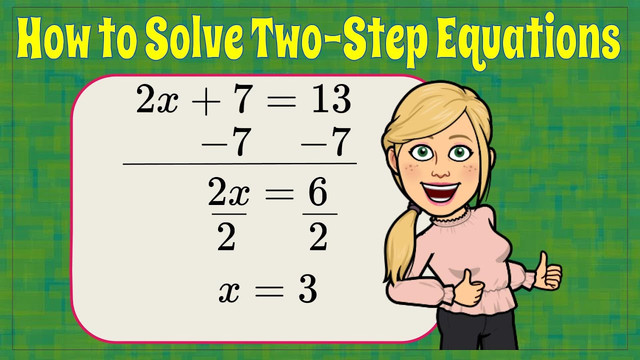
Unlike a basic calculator, which generally displays a numerical result, a step-by-step solver can explain how that result was obtained. For example, when solving an equation, it may show how to move terms, simplify expressions, perform arithmetic operations, and determine the final value of the unknown variable.
These tools can be useful for school students, college learners, teachers, and adults who want to refresh their mathematical knowledge. Their usefulness depends on the subjects supported, the accuracy of the input, and the quality of the explanations provided.
How a Step-by-Step Math Solver Works
Most online math-solving tools follow a straightforward process. The user enters a mathematical question, and the system interprets the symbols, identifies the relevant operations, and calculates a solution using an appropriate method.
Some tools explain each transformation separately. For instance, an algebra problem may begin with an equation, continue with simplifying both sides, and finish by isolating the variable. Other tools may provide a shorter explanation, so users should check whether the displayed steps are detailed enough for their learning needs.
Image-based solvers use optical character recognition or similar techniques to interpret handwritten or printed questions. Results can be less reliable when a photograph is blurry, symbols overlap, or handwriting is difficult to recognize. Checking the interpreted question before accepting the answer helps prevent confusion.
The best approach is to read the question carefully, review the proposed method, and verify the final result whenever possible.
Why Students Use Maths Solvers
Students use maths solvers for several reasons, especially when studying independently or practicing unfamiliar topics. A clear explanation can help them identify where their understanding breaks down and which mathematical rule applies.
A solver can make homework practice more productive by showing intermediate calculations. When a student gets an answer wrong, comparing their working with the explanation may reveal a sign error, an incorrect formula, or a missed operation.
These tools can also save time when checking practice exercises. Instead of spending all their study time calculating one answer, students can review the method and then attempt related questions to strengthen their skills.
Another advantage is flexibility. Learners can practice at home, during revision, or whenever they need additional explanations. Nevertheless, a solver should complement textbooks, classroom teaching, and personal practice rather than replace them entirely.
Mathematical Topics These Tools Can Solve
A maths solver with steps may support several areas of mathematics, although available features differ between platforms.
Basic arithmetic includes addition, subtraction, multiplication, division, percentages, decimals, and fractions. These operations form the foundation for more advanced calculations, making clear explanations particularly useful for beginners.
Algebra solvers can help with linear equations, quadratic equations, expressions, inequalities, and systems of equations. They may show how to simplify terms, expand brackets, factor expressions, or isolate unknown values.
Geometry tools can assist with formulas involving area, perimeter, angles, and other measurements. Trigonometry features may explain relationships between angles and sides, while calculus solvers can address differentiation, integration, and limits when those subjects are supported.
Some tools also handle statistics, probability, logarithms, and matrices. Before relying on a particular service, learners should confirm that it supports their topic and provides explanations appropriate to their educational level.
How to Use a Maths Solver Effectively
Using a solver effectively requires more than entering a question and copying the result. Students should treat every solution as an opportunity to learn a method that can be applied to other problems.
Begin by entering the question accurately. Include brackets, exponents, fractions, and negative signs wherever necessary. If the tool accepts images, make sure the entire question is visible and readable.
After receiving the solution, examine each step in order. Ask why a particular operation was performed and which mathematical rule makes it valid. If an unfamiliar formula appears, review its meaning before moving forward.
Next, compare the explanation with your own working. Identify the first step where your approach differs from the displayed method. This is usually more useful than concentrating only on the final answer.
Finally, close the solution and attempt a similar problem independently. If you can reproduce the method without assistance, you are more likely to remember it during a test or examination.
Common Mistakes to Avoid
One common mistake is trusting every generated answer without checking the original question. Incorrectly entered symbols or misunderstood expressions can produce solutions that appear convincing but address a different problem.
Another mistake is memorizing steps without understanding their purpose. Mathematical procedures often depend on specific rules, and applying them incorrectly to another question can lead to errors.
Students should also avoid using solvers as a substitute for regular practice. Watching an explanation may create a sense of understanding, but independent problem-solving reveals whether the concept has actually been learned.
A further concern is relying on one method when another may be clearer. Some equations can be solved using different valid approaches. Comparing methods can improve flexibility and help learners recognize patterns across mathematical topics.
For school assignments and examinations, students should follow their teacher’s instructions regarding permitted tools and demonstrate their own understanding wherever required.
Benefits for Homework and Exam Preparation
A step-by-step solver can support homework by making difficult questions more approachable. Students can review unfamiliar procedures, identify calculation errors, and revisit explanations while studying without immediate access to a teacher.
During exam preparation, these tools can help organize revision around specific weaknesses. A student struggling with fractions, for example, can practice simplifying fractions before progressing to equations involving fractional terms.
They may also help learners revise formulas and understand how those formulas are applied. Working through examples is particularly useful when mathematical concepts build on earlier knowledge.
However, exam success requires more than reading solved examples. Students should complete timed exercises, practice without assistance, and learn to explain their reasoning clearly. A solver can support this preparation, but independent performance remains an important measure of progress.
Choosing the Right Maths Solver
Choosing an appropriate tool depends on your learning goals, mathematical level, and preferred way of studying. Some learners need detailed algebra explanations, while others want support with arithmetic, geometry, or advanced mathematics.
Look for clear, logically ordered steps instead of answers alone. The explanations should use understandable language and show enough intermediate work to make the method easy to follow.
Ease of use is another important consideration. A simple interface, readable equations, and reliable input options can make regular practice more convenient. Image scanning may be helpful for textbook questions, provided the tool recognizes mathematical symbols accurately.
Privacy and cost also deserve attention. Review the service’s policies before uploading personal documents, and check whether essential features require payment or an account.
Most importantly, select a tool that encourages learning rather than passive copying. The strongest choice is one that helps you understand the process and eventually solve problems independently.
Conclusion
A maths solver with steps can make mathematics more accessible by explaining calculations, demonstrating problem-solving methods, and helping students identify mistakes. From arithmetic and fractions to algebra, geometry, and advanced topics, these tools can provide useful support when their explanations match the learner’s needs.
Their effectiveness depends on how they are used. Enter questions carefully, examine every calculation, verify results, and practice similar problems without assistance. Avoid treating a generated answer as a replacement for understanding.
When combined with regular practice, classroom instruction, and thoughtful revision, a step-by-step math solver can become a valuable learning companion. The ultimate goal is not simply to obtain correct answers, but to develop the confidence and skills needed to solve mathematical problems independently.