
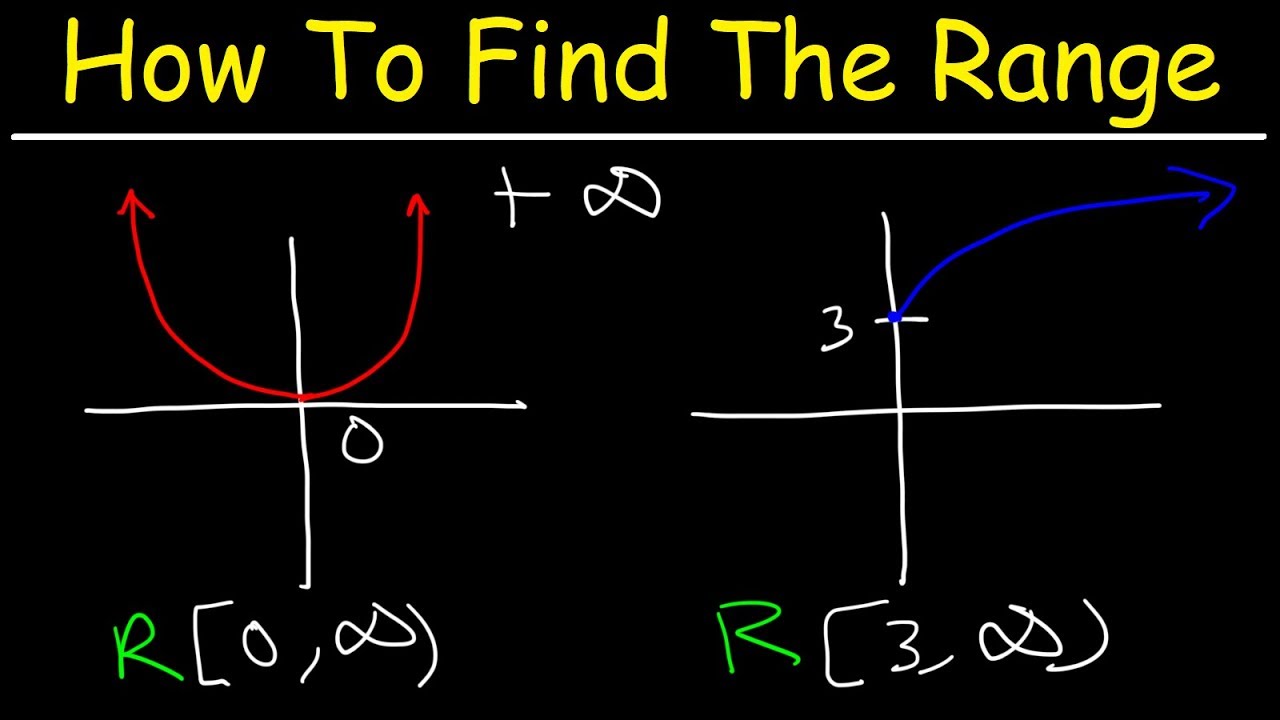
Understanding mathematical terms is important for building a strong foundation in mathematics, especially when working with numbers, statistics, graphs, and data sets. One useful concept students frequently encounter is the range meaning in math. Range is a simple measurement that helps explain how widely values are spread within a collection of numbers. It is commonly used in elementary mathematics, statistics, probability, data analysis, and everyday calculations. Although the calculation is usually straightforward, understanding what the range represents is just as important as knowing the formula. By identifying the largest and smallest values and comparing them, students can quickly determine the overall spread of a data set. This makes range useful when comparing groups of numbers and understanding variation. Learning this concept with clear examples can make many mathematical problems easier to solve.
What Is Range in Math?
The range meaning in math refers to the difference between the highest value and the lowest value in a set of numbers. In simple terms, range tells us how far apart the smallest and largest observations are. To calculate it, you first identify the maximum value and minimum value in the data set. Then, subtract the minimum value from the maximum value. The basic formula is: Range = Maximum Value − Minimum Value. For example, consider the numbers 4, 7, 9, 12, and 15. The largest number is 15, while the smallest number is 4. Therefore, the range is 15 − 4 = 11. The range does not tell us everything about a data set, but it provides a quick way to understand its spread.
Range Formula in Mathematics
The formula for finding range is very easy to remember:
Range = Highest Value − Lowest Value
The highest value is also called the maximum, while the lowest value is called the minimum. Suppose a student receives the following marks: 62, 70, 75, 81, and 90. The highest mark is 90 and the lowest mark is 62. Therefore, the range is 90 − 62 = 28. This means there is a difference of 28 marks between the lowest and highest scores. When calculating range, it is not necessary to arrange the numbers in order if you can identify the minimum and maximum values directly. However, arranging the numbers from smallest to largest can make the process easier, especially when working with larger data sets. The formula remains the same regardless of how many values are included.
How to Find the Range Step by Step
Finding the range involves only a few simple steps. First, examine the complete set of numbers carefully. Second, identify the smallest number. Third, identify the largest number. Finally, subtract the smallest number from the largest number. For example, take the data set 18, 25, 11, 32, 27, and 20. The smallest value is 11 and the largest value is 32. Applying the formula gives 32 − 11 = 21. Therefore, the range is 21. This process works for most basic range questions. Students should be careful not to subtract the largest value from the smallest because that would produce a negative result. The purpose of range is to measure the distance between the two extreme values, so the maximum should normally be placed first in the subtraction.
Examples of Range in Math
Examples make the range meaning in math much easier to understand. Consider the data set 5, 8, 13, 17, and 21. The minimum is 5 and the maximum is 21. Therefore, the range is 21 − 5 = 16. Now consider another example: 100, 105, 108, 115, and 120. Here, the smallest number is 100 and the largest number is 120, giving a range of 20. These examples demonstrate that range measures the distance between the two extreme observations rather than the number of observations in the data set. Even if two data sets contain the same number of values, they can have very different ranges. A data set with values clustered closely together will usually have a smaller range, while a data set containing values spread far apart will have a larger range.
Range With Negative Numbers
The range calculation also works when a data set contains negative numbers. The important step is correctly identifying the highest and lowest values. For example, consider the numbers −12, −7, −3, 2, and 9. The highest value is 9 and the lowest value is −12. Therefore:
Range = 9 − (−12) = 21
The two negative signs effectively become a positive when subtracting the negative minimum. Another example is −20, −15, −8, −4, and −1. The highest value is −1 and the lowest value is −20, so the range is −1 − (−20) = 19. Students sometimes make mistakes with negative numbers because they focus only on the numerical digits rather than their positions on the number line. Remember that a number farther to the right on the number line is greater than one farther to the left.
Range With Decimals and Fractions
The range meaning in math also applies to decimal and fractional values. The same maximum-minus-minimum formula is used regardless of the type of numbers. Suppose a data set contains 2.5, 3.7, 1.8, 4.2, and 3.1. The maximum is 4.2 and the minimum is 1.8. Therefore, the range is 4.2 − 1.8 = 2.4. Fractions can also be handled using the same principle.
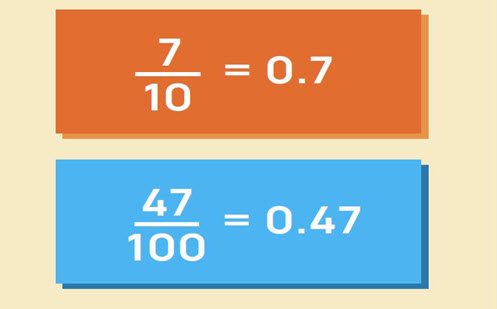
For example, if the values are 1/4, 1/2, 3/4, and 5/6, identify the smallest and largest fractions before subtracting them. Converting fractions to a common denominator can make the subtraction easier. The important idea is that range is not limited to whole numbers. It can describe the spread of integers, decimals, fractions, measurements, temperatures, percentages, and many other numerical values.
Range in Statistics
Range is especially important in statistics because it provides a quick measurement of variability. When statisticians examine a data set, they often want to know whether values are concentrated around a similar level or spread across a wide interval. Range provides an immediate indication of this spread. For instance, imagine two groups of test scores. Group A has scores of 78, 80, 81, 82, and 83, while Group B has scores of 55, 70, 80, 91, and 98. Group A has a range of 5, whereas Group B has a range of 43. Although both groups have five scores, Group B is much more spread out. This illustrates why range can be useful for comparing data sets. However, range considers only the two extreme values, so it may not fully describe the distribution of all observations.
Why Is Range Important?
The range meaning in math is important because it provides a fast and simple way to understand variation. In classrooms, teachers can use range to compare student scores. In business, companies can use it to examine differences in sales or prices. In science, researchers can use it to compare measurements collected during experiments. In everyday life, people might calculate a temperature range to understand how much the weather changed during a day. Range is particularly useful when a quick measurement is needed rather than a complex statistical analysis. It can also help identify unusual differences between values. However, because it depends heavily on the highest and lowest observations, one unusually large or small value can significantly change the range. For this reason, range is often used alongside other statistical measurements.
Range Compared With Mean, Median, and Mode
Range should not be confused with other common statistical terms such as mean, median, and mode. The mean is the average of a set of numbers, calculated by adding all values and dividing by the number of values. The median is the middle value when numbers are arranged in order. The mode is the value that appears most frequently. Range, on the other hand, focuses only on the difference between the highest and lowest values.

For example, in the data set 2, 4, 4, 6, and 9, the mean is 5, the median is 4, the mode is 4, and the range is 7. Each measurement provides different information. Mean, median, and mode describe central tendencies, while range describes the spread between the extreme observations.
Range in Real-Life Situations
The range meaning in math becomes particularly useful when connected to real-world situations. Weather reports often describe temperature ranges, such as a low of 20°C and a high of 32°C. The temperature range is therefore 12°C. Businesses can use ranges to describe product prices, employee salaries, monthly sales, or customer spending. Schools may examine the range of examination scores to understand differences between students’ results. Sports analysts can compare the range of player statistics across games or seasons. Even simple household activities can involve range. For example, if electricity usage varies from 8 units on one day to 15 units on another, the usage range is 7 units. These examples show that range is not just a classroom formula; it is a practical way to describe variation between minimum and maximum measurements.
Common Mistakes When Finding Range
One common mistake is using the wrong values. Students sometimes choose the first and last numbers listed instead of finding the actual minimum and maximum. Another mistake is performing the subtraction in the wrong direction. The maximum value should be reduced by the minimum value. Negative numbers can create additional confusion because subtracting a negative requires careful attention. Decimal calculations can also lead to errors if the decimal places are not aligned correctly. Another misunderstanding is thinking that range means the number of values in a data set. For example, a data set containing ten numbers does not necessarily have a range of ten. Range depends only on the difference between the largest and smallest values. Checking the minimum and maximum values before calculating can prevent many of these errors.
A Quick Method to Remember Range
A simple way to remember the range meaning in math is to think of the phrase “top minus bottom.” Find the top, or largest, number and subtract the bottom, or smallest, number. For example, if a list contains 12, 18, 24, 29, and 35, identify 35 as the maximum and 12 as the minimum. Then calculate 35 − 12 = 23. Another useful strategy is to imagine the numbers on a number line. The range represents the distance between the two extreme points. This visual approach is particularly helpful when negative numbers are included. Students can also create a small checklist: find maximum, find minimum, subtract minimum from maximum, and check the answer. Practicing several different examples can make this process automatic.
Limitations of Range
Although range is easy to calculate, it has some limitations. It depends entirely on two observations: the maximum and minimum. If one extreme value is unusually high or low, the range can become much larger than the spread of most of the data. For example, consider the values 20, 21, 22, 23, and 80. The range is 60, even though four of the five values are tightly grouped between 20 and 23. This shows that range does not describe how the values are distributed throughout the data set. More advanced statistical measurements, such as variance and standard deviation, can provide additional information about variation. Nevertheless, range remains valuable because it is simple, fast, and easy to interpret, especially when introducing students to the basic idea of statistical spread.
Conclusion
The range meaning in math is the difference between the highest and lowest values in a data set. Its basic formula is simple: subtract the minimum value from the maximum value. Despite its simplicity, range is an important concept in mathematics and statistics because it provides a quick picture of how widely data values are spread. It can be used with whole numbers, negative numbers, decimals, fractions, measurements, and real-world data. Understanding how to identify the maximum and minimum values is the key to calculating range correctly. While range has limitations because it considers only the two extreme values, it remains an effective starting point for understanding variability. With regular practice and clear attention to positive and negative values, students can confidently use range in a wide variety of mathematical and statistical problems.