
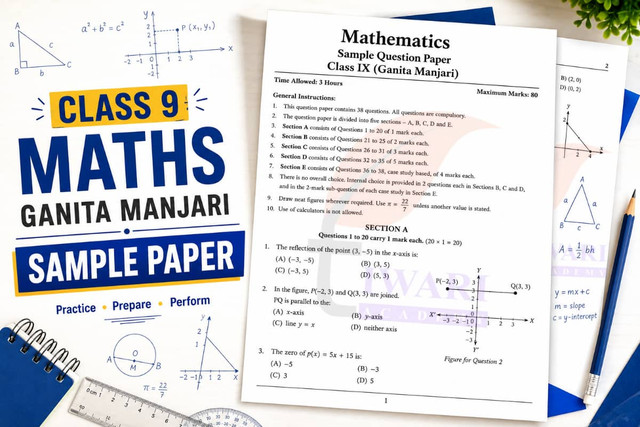
Class 9 mathematics introduces students to concepts that require more than memorizing formulas. Algebraic expressions, number systems, coordinate geometry, linear equations, triangles, quadrilaterals, statistics, and surface-area concepts all require logical thinking and regular practice. A maths solver class 9 resource can support this learning process by helping students understand how a problem is approached, which formula is relevant, and how individual steps lead to the final answer.
The real value of a solver is not simply obtaining an answer. Students benefit more when they use solutions to identify mistakes, compare different methods, and understand the reasoning behind each calculation. Used alongside textbooks, classroom teaching, notebooks, and independent practice, digital mathematics support can become a useful part of a student’s study routine.
Why Class 9 Mathematics Needs a Strong Foundation
Class 9 often acts as a bridge between basic school mathematics and more advanced topics. Students encounter problems that combine multiple concepts, making it important to understand the underlying principles instead of relying on memorized procedures.
For example, solving a linear equation may require students to simplify expressions before isolating a variable. Similarly, a geometry question may depend on recognizing a property of triangles or parallel lines before any calculation begins. When students understand these connections, they become more comfortable handling unfamiliar questions.
A maths solver class 9 approach can make such problems easier to examine because it breaks complex questions into smaller stages. Instead of viewing a lengthy solution as one large calculation, students can study what happens at each stage and determine why a particular operation is performed.
Key Topics Students Can Practise
A good mathematics practice system should cover a broad selection of Class 9 concepts. Different topics require different problem-solving techniques, so students should avoid concentrating exclusively on calculations.
| Class 9 Topic | Important Learning Focus | Useful Practice Method |
|---|---|---|
| Number Systems | Rational and irrational numbers | Simplification and classification |
| Polynomials | Terms, coefficients, identities | Expansion and factorization |
| Coordinate Geometry | Points and coordinates | Plotting and reading graphs |
| Linear Equations | Variables and relationships | Step-by-step equation solving |
| Geometry | Properties and theorems | Diagram-based reasoning |
| Statistics | Data representation | Tables, graphs, and interpretation |
| Surface Areas | Measurements and formulas | Formula selection and substitution |
Regular exposure to different question types helps students recognize patterns. A maths solver class 9 tool can be particularly useful when students are unsure whether their method is correct or want to review a worked example after attempting a question themselves.
Using Solved Examples the Right Way
One of the most effective ways to use a solved mathematics question is to attempt it independently first. Even if the answer is incorrect, the attempt provides useful information about where understanding may be incomplete.
After completing a problem, students can compare their work with the solution. They should look for differences in formula selection, arithmetic, signs, substitutions, or logical reasoning. This turns a solution from an answer sheet into a learning resource.
For instance, suppose a student expands an algebraic expression and receives a different result from the worked solution. Instead of immediately copying the correct expression, the student should review every multiplication and sign change. Finding the exact point of the error creates a stronger understanding of algebraic manipulation.
This makes a maths solver class 9 resource more useful as a checking and learning aid than as a shortcut for completing homework.
How Step-by-Step Solutions Improve Understanding
Step-by-step explanations are especially valuable for students who struggle with questions containing several operations. A clear solution generally identifies the information given, selects an appropriate method, performs the calculation, and reaches a conclusion.
Consider a simple equation such as:
3x + 7 = 22
The student first subtracts 7 from both sides:
3x = 15
Then divide both sides by 3:
x = 5
Although this example is straightforward, the same principle applies to more complicated equations. Each transformation should preserve equality. Understanding this principle helps students solve unfamiliar equations instead of memorizing a fixed pattern.
A maths solver class 9 resource can reinforce this habit when explanations clearly show the transition from one mathematical step to the next.
Building Better Problem-Solving Habits
Students can improve mathematics performance by developing a consistent process for approaching questions. Before calculating, they should read the complete question and identify what is known and what needs to be found.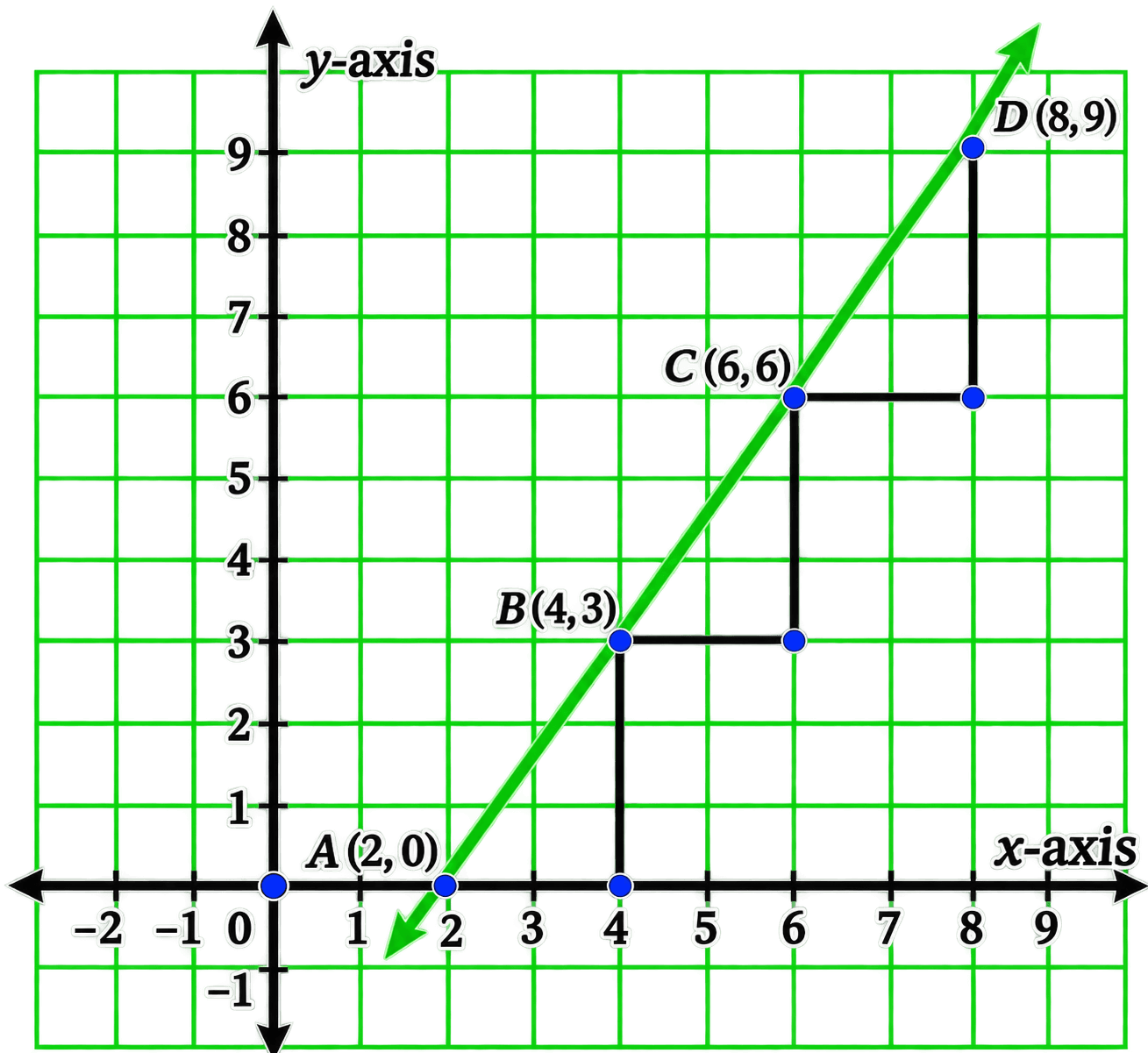
Useful habits include:
- Writing down important information before starting.
- Selecting a formula only after understanding the question.
- Keeping calculations organized line by line.
- Checking signs, units, and arithmetic before finalizing.
- Reviewing incorrect answers instead of immediately moving on.
These habits are useful across algebra, geometry, statistics, and mensuration. They also make written work easier to review before examinations.
Common Mistakes Students Should Avoid
Many Class 9 mathematics errors are not caused by a lack of intelligence or effort. They often occur because students rush through familiar operations. A missed negative sign, incorrect formula, poorly copied value, or skipped reasoning step can change an otherwise correct solution.
Another common mistake is depending on solved answers without attempting questions independently. This can create the impression that a topic has been mastered when the student has only followed someone else’s procedure.
Students using a maths solver class 9 resource should therefore treat incorrect answers as opportunities for diagnosis. If the same type of mistake appears repeatedly, that topic deserves additional practice from the textbook or class notes.
Making Digital Mathematics Practice More Effective
Digital tools can be useful, but they work best when combined with active learning. Students should avoid entering every question into a solver before thinking about it. A better sequence is to understand the question, attempt a solution, check the result, and then examine the explanation.
It can also help to maintain a mistake notebook. Whenever an error occurs, the student can record the question type, the mistake made, and the correct reasoning. Reviewing these notes before a test can reveal patterns that may otherwise go unnoticed.
A maths solver class 9 platform can complement this process by providing additional examples when students need to revisit a concept. However, the student’s own reasoning should remain at the center of the learning process.
Preparing for School Tests and Examinations
Effective preparation involves more than solving a large number of questions. Students should balance conceptual revision with timed practice. Begin by reviewing definitions, properties, formulas, and important examples. Next, solve exercises without looking at the answers.
After completing a practice session, classify mistakes into categories such as conceptual errors, calculation errors, or questions that were left incomplete. This makes revision more targeted.
Students can also use a maths solver class 9 resource during revision to clarify difficult steps rather than repeatedly rereading entire chapters. When a particular concept remains confusing, returning to the textbook explanation and asking a teacher for clarification can provide additional context.
Choosing the Right Learning Approach
Not every student learns mathematics in exactly the same way. Some understand concepts quickly through diagrams, while others benefit from written explanations and repeated examples. A useful study approach should therefore combine multiple forms of learning.
For geometry, diagrams and labeled figures can make relationships easier to recognize. For algebra, writing every transformation clearly can prevent mistakes. For statistics, tables and graphs can help students interpret numerical information visually.
The most effective approach is usually one that encourages students to explain the reasoning in their own words. If a student can describe why a formula works and why a particular step is necessary, that indicates deeper understanding than simply reproducing an answer.
Turning Difficult Questions Into Manageable Steps
When a question looks difficult, students should avoid trying to solve everything mentally. Breaking it into smaller tasks can reduce confusion. First identify the given values, then determine the required result, select the relevant concept, and complete the calculation carefully.
For geometry problems, drawing a clean diagram may reveal information that is difficult to see in the written question. For algebraic problems, simplifying expressions before substitution can make later steps easier. For data-based questions, organizing values in a table can reduce calculation errors.
A maths solver class 9 resource can demonstrate these techniques through worked examples, allowing students to see how experienced problem-solvers structure their reasoning.
Conclusion
Class 9 mathematics becomes more manageable when students focus on concepts, logical steps, and consistent practice rather than simply chasing final answers. A maths solver class 9 resource can provide useful support for checking calculations, reviewing difficult examples, identifying mistakes, and understanding alternative solution methods.
However, the strongest results come when students attempt questions independently and use solved explanations as feedback. Combining classroom learning, textbooks, practice exercises, revision notes, and responsible digital assistance creates a balanced mathematics study routine. With regular practice and careful attention to reasoning, students can develop the confidence and problem-solving skills needed for more advanced mathematics.

