
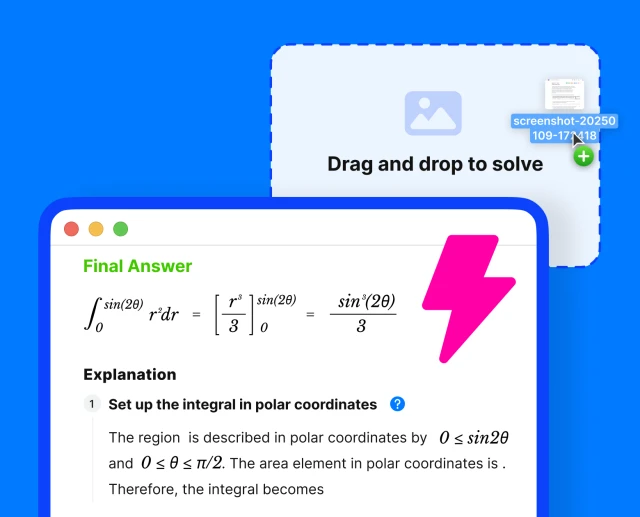
A maths solver can make difficult mathematical problems easier to understand by helping users work through equations, calculations, algebraic expressions, geometry questions, and other numerical challenges. Modern solving tools are designed to do more than produce an answer. Many can show intermediate steps, identify mathematical operations, and provide explanations that help learners understand how a solution is reached.
For students, teachers, professionals, and independent learners, these tools can serve as useful companions during study and practice. However, getting the most value from a digital solution tool depends on knowing how to enter problems correctly, interpret the result, and use explanations as part of the learning process rather than simply copying an answer.
What Is a Maths Solver?
A maths solver is a digital tool designed to process mathematical problems and provide solutions or explanations. Depending on its features, it may handle basic arithmetic, fractions, percentages, equations, inequalities, algebra, calculus, matrices, statistics, or geometry.
Some tools require users to type an equation, while others can interpret problems entered through an image or handwritten input. The system then applies relevant mathematical rules and presents a result. More advanced platforms may break the process into individual steps so users can follow the reasoning.
The usefulness of such a tool depends on the type of problem being solved. A simple arithmetic question may need only a final result, whereas an algebraic equation can benefit from a detailed explanation showing how each transformation changes the expression.
How These Tools Solve Mathematical Problems
Most digital mathematics tools follow a sequence of operations based on the structure of the submitted problem. First, the system interprets numbers, symbols, variables, and mathematical relationships. It then identifies an appropriate method before performing the necessary calculations.
For example, consider the equation:
3x + 7 = 22
The solver can recognize that the objective is to isolate x. Subtracting 7 from both sides gives 3x = 15, and dividing both sides by 3 produces x = 5.
This simple example demonstrates why step-by-step explanations can be valuable. The answer itself is only one part of the process. Understanding why each operation is performed helps learners apply the same method to different equations.
Types of Problems You Can Work With
The range of supported problems varies from one platform to another, but many mathematical solving tools cover several common areas.
| Problem Type | Typical Use | Learning Benefit |
|---|---|---|
| Arithmetic | Addition, subtraction, multiplication, division | Builds calculation confidence |
| Algebra | Equations, expressions, variables | Supports symbolic reasoning |
| Geometry | Angles, areas, volumes | Helps apply formulas |
| Calculus | Derivatives and integrals | Assists with advanced concepts |
| Statistics | Mean, probability, data calculations | Supports quantitative analysis |
| Fractions | Simplification and conversions | Improves numerical understanding |
| Graphs | Functions and coordinate relationships | Connects equations with visuals |
A maths solver can therefore be useful across different educational levels, although advanced topics may require a tool with specialized capabilities. Users should always check whether the particular mathematical operation they need is supported.
Why Step-by-Step Solutions Matter
A final answer can confirm whether a calculation is correct, but a worked solution can explain how the answer was obtained. This distinction is especially important for students who are developing mathematical reasoning.
Suppose a learner receives the answer to a quadratic equation without any explanation. They may know the numerical result but still struggle with another quadratic problem later. By contrast, an explanation can demonstrate factorization, substitution, or use of the quadratic formula.
Step-by-step guidance can also help users identify where an error occurred. If their answer differs from the tool’s result, comparing each stage may reveal an incorrect sign, arithmetic mistake, or misunderstood formula.
This makes mathematical software more useful when it supports conceptual learning, rather than being treated solely as an answer generator.
Using a Maths Solver for Study and Practice
Students can incorporate a maths solver into a broader study routine in several ways. One approach is to attempt a problem independently before checking the solution. This preserves the problem-solving effort while allowing the tool to act as a verification resource.
Another approach is to use it after making an error. Instead of immediately accepting the displayed answer, the learner can compare the solution process with their own work and identify the first point where the methods differ.
Useful study habits include:
- Solve the problem independently before checking it.
- Read each displayed step instead of looking only at the final number.
- Rework similar questions without assistance.
- Verify whether the result makes sense in the original problem.
- Keep track of recurring mistakes for later revision.
This approach turns digital assistance into an interactive learning aid rather than a shortcut.
Common Mistakes When Entering Problems
One of the biggest challenges with automated mathematical tools is incorrect input. A system can only work with the information it receives, so missing brackets, misplaced signs, or incorrectly entered exponents can change the meaning of an expression.
For example, 2(x + 4) is different from 2x + 4. Similarly, an expression involving a negative number may require parentheses to communicate the intended operation clearly.
Users should carefully check:
Numbers and signs: Confirm that positive and negative values are entered correctly.
Parentheses: Use brackets where the order of operations requires them.
Variables: Make sure every variable is represented consistently.
Units: For applied problems, check whether measurements such as meters, kilograms, or seconds are being handled correctly.
Question wording: A numerical answer may not fully address a word problem if important conditions were omitted during input.
Careful entry is therefore an essential part of getting a reliable result.
Maths Solver Compared With Manual Calculation
Manual calculation and digital solving each have different purposes. Traditional working develops concentration, mathematical fluency, and familiarity with formulas. Digital tools can reduce repetitive calculations and make complicated procedures easier to inspect.
For example, when learning percentage calculations, manually solving several questions can strengthen understanding. Once the method is familiar, a digital tool can be useful for checking a larger set of calculations or investigating a more complicated scenario.
A maths solver should not necessarily replace handwritten or mental practice. Instead, it can complement those methods by providing another way to verify reasoning and explore alternative solution methods.
This balance is particularly useful in education because mathematical ability involves more than obtaining correct numerical answers. It also includes selecting methods, explaining reasoning, interpreting results, and recognizing whether an answer is reasonable.
Useful Features to Look For
Different platforms provide different capabilities, so users should consider features according to their needs. A basic calculator may be sufficient for everyday arithmetic, while students working with algebra or calculus may need detailed symbolic support.
Important features can include:
- Step-by-step explanations
- Equation recognition
- Fraction and decimal handling
- Graphing capabilities
- Symbolic algebra
- Multiple solution methods
- Support for mathematical notation
- Error checking or verification
An intuitive interface also matters. If entering an equation is unnecessarily complicated, even a technically capable tool can become frustrating to use.
How Teachers and Professionals Can Benefit
Teachers can use digital mathematics tools to prepare examples, verify calculations, and demonstrate different solution approaches. When used carefully, these systems can support classroom discussions about why a particular method works.
Professionals can also benefit when mathematics appears in routine calculations, data analysis, engineering tasks, finance, research, or technical work. In these situations, checking calculations can reduce avoidable arithmetic errors, although important professional decisions should still rely on appropriate verification and domain expertise.
A maths solver can be especially useful for exploring hypothetical scenarios. Users can change variables, test alternative values, and observe how the resulting calculation changes. This makes mathematical concepts more interactive and practical.
Responsible Use of Digital Mathematics Tools
The most effective use of automated solving technology involves understanding its limitations. A displayed answer should not automatically be treated as proof that the original question was interpreted correctly.
For important calculations, users should independently review the formula, assumptions, units, and resulting value. In academic settings, students should also follow their institution’s rules concerning calculators, software, and assisted problem solving.
Digital assistance is most valuable when it encourages curiosity. If a solution seems unexpected, users can investigate the method, test the result with another calculation, or solve the problem manually. This habit develops stronger mathematical judgment over time.
Choosing the Right Approach for Different Tasks
Not every problem requires the same level of digital assistance. Basic arithmetic may be completed quickly with mental calculation or a simple calculator. Algebraic manipulation may benefit from step-by-step symbolic support, while graphs and advanced equations can require more specialized software.
Before using a maths solver, consider what you actually need: a quick verification, a detailed explanation, practice support, graph visualization, or help understanding a particular mathematical concept.
The goal should be to select a method that matches the learning or practical objective. A tool is most helpful when it saves unnecessary effort without removing the opportunity to understand the mathematics involved.
Conclusion
A maths solver can be a practical resource for checking calculations, exploring equations, understanding mathematical procedures, and supporting independent study. Its greatest educational value comes from examining the reasoning behind a result rather than simply accepting the final answer.
Used alongside manual practice, careful input, formula knowledge, and independent verification, digital mathematics tools can make challenging topics more approachable. Whether the task involves basic arithmetic, algebra, geometry, calculus, or statistics, the right approach is to treat technology as a support for mathematical thinking. By combining automated assistance with genuine understanding, learners and professionals can solve problems more efficiently while continuing to develop their own mathematical skills.