
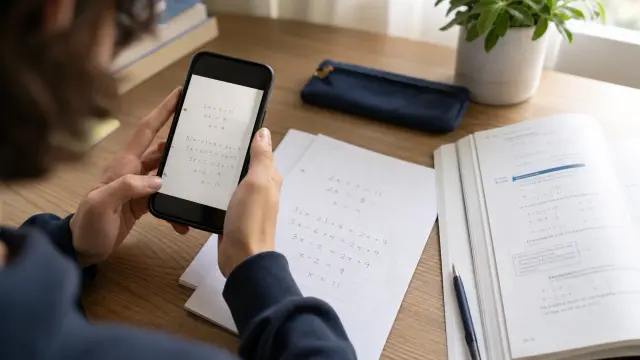
Class 9 mathematics introduces students to concepts that become important throughout higher-level mathematics. Topics such as number systems, polynomials, coordinate geometry, linear equations, geometry, statistics, and surface areas require both conceptual understanding and regular practice. A maths solver class 9 can support this learning process by helping students examine difficult questions, understand solution methods, and identify mistakes.
The purpose of a solver should not be limited to producing a final answer. Mathematics becomes easier when students understand why a particular formula, theorem, or calculation is used. When used thoughtfully, digital solving tools can act as supplementary learning resources alongside textbooks, classroom teaching, notebooks, and guided practice.
Why Class 9 Mathematics Requires a Strong Foundation
Class 9 often marks a transition from relatively straightforward arithmetic and elementary algebra toward more structured mathematical reasoning. Students are expected to interpret questions carefully, select suitable methods, and present solutions in logical steps.
A maths solver class 9 can be useful when a student reaches a point where the next step is unclear. For example, while solving a polynomial expression, the student may know the basic rules but struggle to simplify the terms correctly. Seeing a structured solution can help reveal where the calculation went wrong.
However, students should first attempt the question independently. This creates an opportunity to develop problem-solving habits rather than depending on an automated answer.
Major Topics Students Can Practice
The Class 9 mathematics curriculum contains several areas that benefit from repeated practice. Different topics require different approaches, so students should understand the type of reasoning involved before relying on a solution tool.
| Class 9 Topic | Important Skill | How a Solver Can Help |
|---|---|---|
| Number Systems | Rational and irrational numbers | Clarifies classification and calculations |
| Polynomials | Identities and factorisation | Shows algebraic steps |
| Coordinate Geometry | Plotting and locating points | Supports coordinate-based reasoning |
| Linear Equations | Algebraic manipulation | Demonstrates equation-solving steps |
| Geometry | Theorem-based reasoning | Helps review logical sequences |
| Heron’s Formula | Area calculation | Assists with formula application |
| Surface Areas | Measurement and formulas | Helps check calculations |
| Statistics | Data interpretation | Supports calculation and verification |
A solver is particularly helpful when students use it to compare their own working with an alternative solution. The difference between the two can reveal an incorrect sign, skipped operation, unsuitable formula, or misunderstanding of the question.
Using a Solver Without Losing Independent Thinking
The most productive way to use a maths solver class 9 is as a learning assistant rather than an answer generator. Students should read the problem, identify the given information, decide what is required, and attempt a solution before checking an external explanation.
Suppose a question asks a student to simplify an algebraic expression. Instead of immediately entering the entire question into a solver, the student can first identify like terms and apply the relevant algebraic rules. After completing the calculation, the solver can be used for verification.
This approach keeps the student involved in the reasoning process. It also makes mistakes useful because students can investigate exactly where their method differs from the expected approach.
How Step-by-Step Solutions Improve Understanding
A final numerical answer does not explain the reasoning behind it. Step-by-step working is much more valuable for students because it connects one mathematical operation to the next.
For example, when solving a linear equation, students need to understand how terms are moved, how operations are applied to both sides, and how the final value is verified. A maths solver class 9 may display these stages clearly, allowing students to observe the relationship between the operations.
Students should pay attention to the explanation instead of simply copying it. Important questions include: Why was this formula selected? Why was this term simplified first? What rule was applied? Could the problem be solved using another method?
These questions turn a solution into a learning experience.
Common Mistakes Students Should Watch For
Many Class 9 mathematics errors are not caused by difficult concepts. They often occur because students rush through basic operations or fail to interpret the question correctly.
Common issues include:
- Misreading negative and positive signs.
- Substituting values incorrectly into formulas.
- Skipping necessary steps in algebraic calculations.
- Applying a geometry theorem without checking its conditions.
- Writing an answer without verifying whether it satisfies the original question.
A maths solver class 9 can help students locate some of these mistakes, but the student still needs to understand why the error occurred. Correcting a mistake is more valuable than simply replacing it with a computer-generated answer.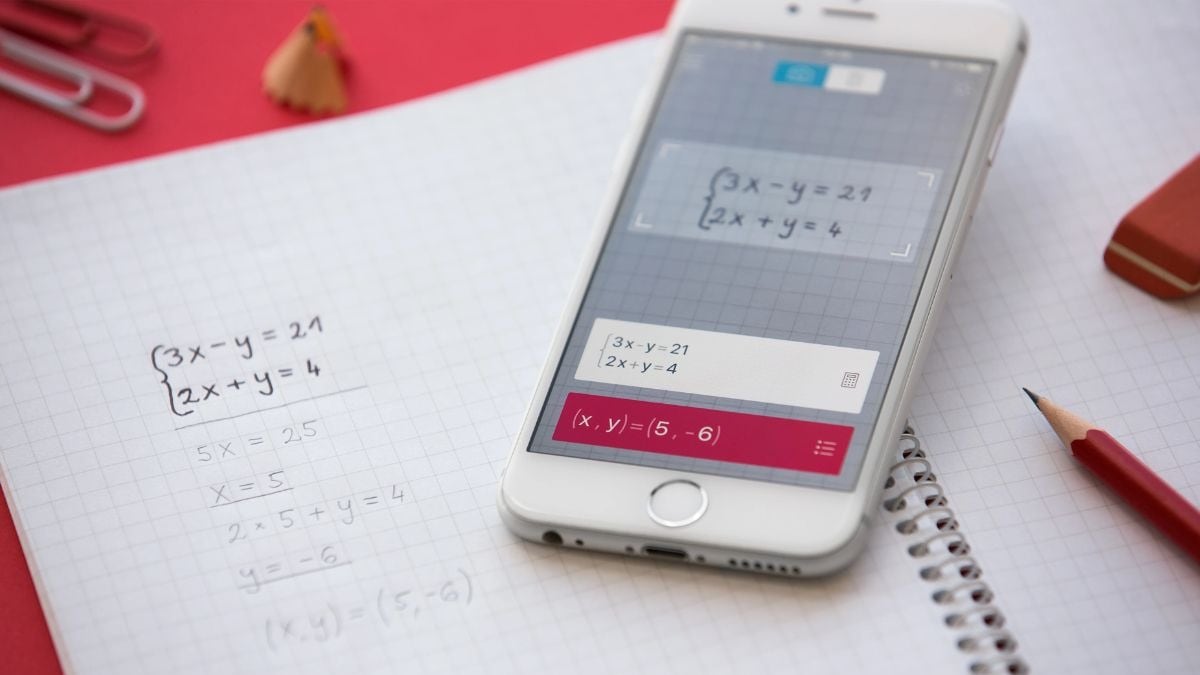
Making Daily Practice More Effective
Consistent practice is generally more useful than attempting a large number of questions immediately before an examination. Students can divide their mathematics study time into concept review, independent problem-solving, error analysis, and revision.
A practical session might begin with reviewing one concept from the textbook. The student can then solve several questions without assistance. Difficult questions can be marked for later review, and a maths solver class 9 can be consulted only after a genuine attempt.
Maintaining an error notebook is another useful strategy. Students can record the question type, their mistake, the correct method, and a short explanation of what they learned. Reviewing these notes before tests can reinforce areas that previously caused difficulty.
Choosing the Right Way to Check an Answer
Not every problem should be checked in the same manner. Arithmetic calculations can often be verified through an alternative calculation, while geometry problems may require students to review the theorem and diagram.
For algebra, substitution can sometimes confirm whether an answer is correct. For coordinate geometry, students can inspect whether a point has been plotted in the appropriate quadrant. For statistics, students can recalculate the relevant values independently.
A maths solver class 9 becomes more useful when students combine automated checking with these manual verification methods. This prevents technology from becoming the only source of confidence.
Supporting Exam Preparation
During examination preparation, students need more than familiarity with answers. They need speed, accuracy, clear presentation, and the ability to choose an appropriate method under time constraints.
Students can use solving tools during revision to review challenging exercises and understand unfamiliar approaches. They should then close the tool and solve similar questions independently. This second stage is important because recognizing a solution is easier than producing one from scratch.
Before an examination, students should revise formulas, mathematical identities, definitions, important theorems, diagrams, and previously identified mistakes. Practicing questions from different chapters can also help students become comfortable switching between mathematical concepts.
Responsible Use of Digital Mathematics Tools
Digital learning tools can make mathematics more accessible, but they should complement education rather than replace it. Students should continue using their school textbook, classroom notes, teacher explanations, and regular written practice.
When using a maths solver class 9, students should also check whether the displayed method matches the approach expected in their curriculum. Different solution methods can sometimes reach the same result, but examination answers may require specific reasoning, constructions, or theorem statements.
Parents and teachers can encourage students to explain solutions in their own words. If a student can describe each step without looking at the tool, that is a stronger indication of understanding than simply obtaining the correct result.
Building Long-Term Mathematical Confidence
Mathematical confidence develops gradually. Students become stronger when they experience challenging questions, make mistakes, correct them, and successfully solve similar problems later.
A maths solver class 9 can contribute to this process by providing another way to examine difficult problems. Its greatest educational value comes from explanation, comparison, and verification rather than instant answers.
Students should therefore treat every difficult question as an opportunity to understand a concept more deeply. Instead of asking only, “What is the answer?” they can ask, “What information is given, which principle applies, and how can I verify my result?”
Conclusion
Class 9 mathematics provides the foundation for many concepts students will encounter in later academic years. A maths solver class 9 can be a practical supplementary resource for checking calculations, studying step-by-step methods, and understanding mistakes. Its effectiveness depends largely on how it is used.
The strongest approach combines independent attempts, textbook learning, written practice, solution checking, and careful error analysis. Students who use digital solving tools as learning companions rather than shortcuts can develop stronger reasoning habits while becoming more comfortable with algebra, geometry, statistics, and other important mathematical topics.