
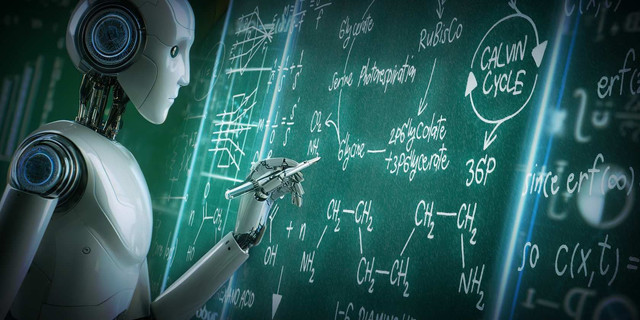
Mathematics becomes much easier to manage when students can see not only an answer but also the reasoning behind it. A maths solver AI can support this process by analyzing mathematical questions, identifying the relevant operations, and presenting solutions in an understandable format. Instead of spending excessive time trying to identify where a calculation went wrong, learners can use AI-powered tools to examine each stage of a problem.
These systems are useful across several areas of mathematics, including arithmetic, algebra, geometry, trigonometry, statistics, and calculus. Their value is not limited to producing quick answers. When used correctly, they can act as digital study assistants that help learners recognize patterns, review formulas, check calculations, and understand unfamiliar methods.
How AI Mathematics Solvers Work
A typical maths solver AI combines language processing, mathematical reasoning, symbolic computation, and pattern recognition. A user may type an equation, describe a word problem, or sometimes provide an image containing a mathematical expression. The system interprets the input and determines what kind of problem it represents.
For example, consider a simple equation such as 3x + 7 = 22. The system needs to identify the variable, isolate it from the constant, and calculate the final value. More advanced questions can involve several equations, functions, graphs, or multiple mathematical rules.
The technology may rely on symbolic mathematics rather than ordinary numerical calculation. This distinction matters because symbolic systems can manipulate expressions while preserving variables and mathematical relationships. As a result, they can handle tasks that require algebraic transformations rather than simply adding or multiplying numbers.
Common Problems These Tools Can Handle
Modern AI-based mathematics assistants can cover a broad range of educational topics. Their capabilities depend on the particular platform, but many tools are designed around common school, college, and self-study requirements.
| Mathematics Area | Typical Problems | Learning Benefit |
|---|---|---|
| Arithmetic | Fractions, percentages, ratios | Builds calculation accuracy |
| Algebra | Equations, inequalities, expressions | Explains variable manipulation |
| Geometry | Angles, areas, measurements | Connects formulas with shapes |
| Trigonometry | Identities, angles, functions | Supports formula application |
| Calculus | Derivatives, integrals, limits | Clarifies multi-step procedures |
| Statistics | Mean, probability, data problems | Helps interpret numerical information |
For algebra students, a maths solver AI can be particularly helpful when an expression contains several operations. Rather than immediately copying the final result, learners can compare the generated steps with their own work. This makes it easier to locate mistakes involving signs, fractions, exponents, or the order of operations.
Step-by-Step Solutions and Learning
One of the most useful features of an AI mathematics assistant is the ability to break a complicated problem into smaller stages. A final answer may confirm whether a result is correct, but individual steps explain why the result is correct.
Suppose a learner is solving a quadratic equation. The process may involve rearranging the equation, identifying coefficients, selecting a suitable method, simplifying expressions, and checking the resulting roots. Seeing these stages in sequence can make a difficult exercise less intimidating.
A maths solver AI can also help students compare different approaches. Some equations can be solved through factoring, completing the square, or the quadratic formula. Understanding that several valid methods can reach the same answer encourages mathematical flexibility rather than memorization of one procedure.
Using AI for Algebra Practice
Algebra is one of the areas where automated solving can provide substantial study support. Students frequently encounter linear equations, simultaneous equations, polynomials, inequalities, and functions.
Consider the expression 2(x + 4) = 18. A learner might first distribute the coefficient, subtract the constant, and divide by the remaining coefficient. If the answer differs from the expected result, an AI assistant can help reveal which transformation caused the error.
The same principle applies to more complicated expressions. Students can use an AI tool to verify factorization, simplify rational expressions, or examine the relationship between equations and graphs. The important habit is to treat the output as an explanation to study rather than a replacement for independent practice.
Geometry and Visual Mathematical Reasoning
Geometry presents a different challenge because many questions depend on relationships between shapes, angles, lengths, and measurements. A solver can assist with calculations involving triangles, circles, polygons, coordinate geometry, and spatial measurements.
For instance, when calculating the area of a triangle, the learner needs to recognize the base and corresponding height before applying the appropriate formula. An automated solution can demonstrate how the known measurements fit into that formula.
However, students should still learn to identify geometric relationships themselves. Understanding why a theorem or formula applies is more valuable than simply obtaining a numerical result. AI can support that understanding by providing intermediate calculations and explaining the mathematical structure of a problem.
Support for Trigonometry and Calculus
Trigonometry introduces functions such as sine, cosine, and tangent, while calculus involves concepts including limits, derivatives, and integrals. Both subjects often require students to follow several connected steps.
A maths solver AI may simplify trigonometric expressions, solve equations involving angles, or demonstrate differentiation procedures. For calculus, it can help identify the appropriate rule for differentiating a function or explain how an integral is transformed during a solution.
These subjects also demonstrate why context matters. A mathematically correct calculation can still be inappropriate if the wrong formula or rule is selected. Students should therefore examine the explanation and verify that the method matches the question.
Benefits for Different Types of Learners
AI mathematics tools can support learners with different study habits. A student reviewing homework may use them to check completed exercises. Someone preparing for an examination may use them to revisit concepts that remain unclear. Independent learners can also use automated explanations when a textbook explanation feels too brief.
The main benefits include:
- Immediate checking: Students can identify calculation errors without waiting for external feedback.
- Detailed explanations: Multi-step problems can be separated into manageable stages.
- Flexible practice: Learners can work through different question types at their own pace.
- Concept reinforcement: Repeated explanations can strengthen understanding of formulas and procedures.
A maths solver AI can also be useful for revision because students can compare their handwritten work against a structured solution. This encourages error analysis, which is an important part of mathematical learning.
How to Get Better Results From an AI Solver
The quality of an AI-generated solution often depends on the quality of the question provided. Clearly written equations and complete problem statements reduce ambiguity. When entering a word problem, students should include all relevant measurements, conditions, and units.
It is also helpful to specify what kind of assistance is needed. Someone learning algebra may benefit more from a step-by-step explanation than from a short numerical answer. Asking for the reasoning, formula, or intermediate transformations can make the tool more educational.
Another useful approach is to attempt the problem independently first. Afterward, the student can compare the two solutions and investigate differences. This turns AI into a checking and learning resource rather than an answer-copying mechanism.
Limitations Students Should Understand
Despite their usefulness, AI mathematics systems are not infallible. An incorrectly entered expression can produce an incorrect interpretation. Complex word problems may contain ambiguity, while advanced mathematical questions can require assumptions that are not obvious from the input.
Students should therefore verify important results using another method when possible. This may involve substituting an answer back into an equation, checking units, drawing a diagram, or reviewing the relevant mathematical rule.
There is also a learning concern associated with overdependence. If students consistently ask an AI system to complete every exercise, they may miss opportunities to develop problem-solving skills. Mathematics requires practice, reasoning, and the ability to recognize which method fits a particular problem.
AI as a Study Partner Rather Than a Shortcut
The strongest educational use of a maths solver AI comes from active participation. Instead of asking only for the final answer, students can request explanations of individual steps, alternative methods, formula definitions, or similar practice questions.
For example, after solving an equation, a learner can ask why a particular operation was performed first. After studying a derivative, the student can examine another function and attempt the calculation independently. This creates a feedback loop in which the learner practices, checks, understands, and then tries again.
Teachers and parents can also encourage responsible use by focusing on reasoning. AI-generated answers become more valuable when learners can explain the method in their own words.
Choosing an Appropriate Mathematics Solver
When evaluating an AI mathematics tool, students should look beyond whether it produces an answer. Important considerations include the clarity of explanations, support for different mathematical topics, ability to interpret equations accurately, and options for reviewing intermediate steps.
A useful tool should make mathematical reasoning easier to inspect. If an application provides only a final number without showing how it was obtained, it may have limited educational value for learners who are trying to improve their skills.
Privacy and input handling can also matter, particularly when using platforms that accept uploaded documents or images. Users should understand what information they are submitting and follow the service’s relevant usage policies.
Conclusion
A maths solver AI can make mathematics more accessible by combining automated calculation with explanations, verification, and structured problem solving. It can support subjects ranging from basic arithmetic and algebra to geometry, trigonometry, statistics, and calculus.
Its greatest educational value comes from helping learners understand the process behind an answer. Students who attempt problems first, examine AI explanations carefully, verify results, and practice independently can use these tools as effective study companions. Used thoughtfully, AI mathematics technology can reduce confusion, encourage deeper review, and make challenging mathematical concepts easier to explore without replacing the reasoning skills that mathematics is designed to develop.