
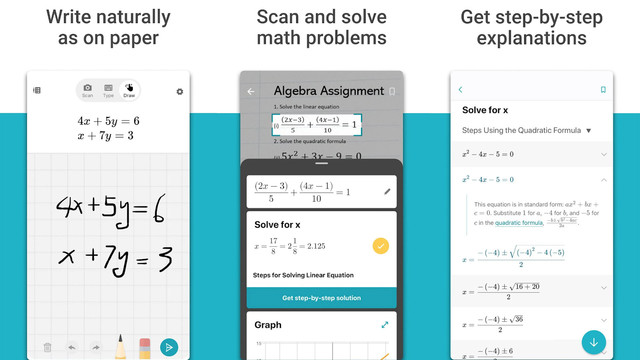
Mathematics becomes easier to manage when difficult calculations are broken into clear, logical steps. A maths solver can help students, teachers, professionals, and independent learners work through equations, arithmetic problems, algebraic expressions, geometry questions, and other mathematical tasks. Instead of focusing only on the final answer, modern solving tools can help users understand how a problem reaches its solution.
The usefulness of these tools depends on how they are used. Entering a question and copying an answer may save time, but reviewing the method behind that answer can provide much greater educational value. A good approach combines digital assistance with manual practice, logical reasoning, and verification.
Understanding What a Maths Solver Does
A maths solver is a digital tool designed to process mathematical problems and produce answers, calculations, or solution steps. Depending on its capabilities, it may handle basic arithmetic, fractions, percentages, linear equations, quadratic equations, systems of equations, inequalities, calculus, or geometry.
Some tools work with typed expressions, while others can interpret equations from photographs or handwritten input. The quality of the result usually depends on how clearly the problem is entered. An incorrectly typed symbol, missing bracket, or misunderstood exponent can change the entire calculation.
For learners, the step-by-step explanation is often more valuable than the final number. It can show which mathematical rule was applied, how terms were rearranged, and why a particular operation was performed.
Common Problems You Can Solve
Different mathematical tasks require different methods. A versatile maths solver can support several categories of problems, although the exact capabilities vary between tools.
| Problem Type | Typical Use | Helpful Learning Focus |
|---|---|---|
| Arithmetic | Addition, subtraction, multiplication, division | Calculation accuracy |
| Fractions | Simplification and operations | Common denominators |
| Algebra | Expressions and equations | Variables and transformations |
| Geometry | Areas, volumes, angles | Formulas and measurements |
| Graphs | Functions and coordinates | Visual interpretation |
| Calculus | Derivatives and integrals | Rules and mathematical reasoning |
Basic arithmetic is useful for checking routine calculations. Algebra tools can assist with solving for unknown variables, while geometry functions may help verify measurements and formula applications. More advanced systems can support topics such as limits, derivatives, matrices, and trigonometric expressions.
How Step-by-Step Solutions Improve Learning
A major advantage of a maths solver is the ability to reveal intermediate steps. Students who repeatedly struggle with a particular type of equation can use those steps to identify where their own method differs.
For example, consider a simple equation such as 3x + 6 = 18. A useful explanation would show that six is subtracted from both sides first, producing 3x = 12. Dividing both sides by three then gives x = 4. The important lesson is not simply that the answer is four. It is understanding why the same operation must be applied consistently to both sides.
This approach encourages procedural understanding. Over time, learners can begin recognizing patterns instead of relying entirely on automated answers.
Using Mathematical Tools Without Losing Core Skills
Technology can make calculations convenient, but excessive dependence can weaken fundamental skills. A maths solver should therefore be treated as a learning assistant rather than a replacement for mathematical thinking.
One effective method is to attempt a question independently before checking it digitally. After solving the problem, compare the personal method with the generated solution. If the answers differ, review each step rather than assuming that one result is automatically correct.
Students can also use digital solutions to create additional practice. Once a particular equation has been solved, changing its numbers and attempting a similar question manually can reinforce the underlying concept.
Benefits for Students at Different Levels
The value of a maths solver changes according to the learner’s needs. A beginner may use one to understand arithmetic operations, fractions, percentages, or simple equations. An advanced student may use it to verify calculus procedures, algebraic transformations, or complicated symbolic expressions.
For school students, step explanations can make homework review more productive. College learners may use mathematical software to check lengthy calculations or explore functions. Independent learners can use these systems when studying unfamiliar concepts without immediate access to a tutor.
Teachers can also benefit from automated checking when preparing examples, practice questions, or classroom demonstrations. However, explanations should still be reviewed carefully before being presented to students.
Accuracy Depends on the Input
Even an advanced maths solver cannot reliably correct every incorrectly entered problem. Users should pay close attention to brackets, decimal points, negative signs, exponents, variables, and units.
For instance, (2 + 3) × 4 is different from 2 + 3 × 4 because multiplication follows a different order of operations. Similarly, -5² can be interpreted differently from (-5)² depending on the mathematical notation and context.
Before accepting a result, check whether the original expression was entered exactly as intended. Clear formatting is especially important when working with long equations or nested fractions.
Supporting Algebra and Equation Practice
Algebra is one area where digital solving assistance can be particularly useful. Learners often find it challenging to move terms across an equation, simplify expressions, factor polynomials, or work with multiple variables.
A maths solver can demonstrate transformations such as combining like terms, distributing multiplication, factoring, and isolating variables. These examples can help students understand the sequence of operations.
However, learners should pay attention to equivalent expressions rather than only the final form. Two mathematically equivalent answers may look different because one has been factored while another has been expanded. Recognizing equivalence is an important algebraic skill.
Making Geometry and Formula-Based Work Easier
Geometry problems often involve multiple measurements and formulas. Calculating the area of a triangle, circumference of a circle, volume of a cylinder, or length of a side may require several stages.
A digital tool can check whether the correct formula has been applied and whether the numerical calculation is accurate. It can also help users compare different representations of the same result.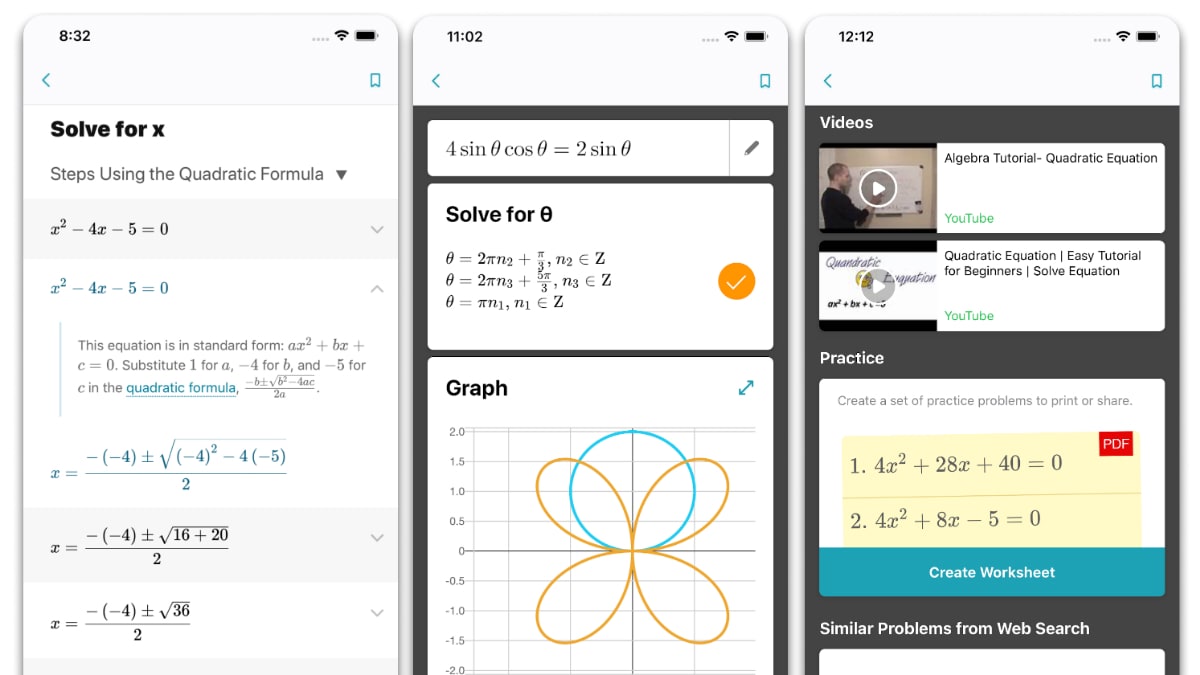
For example, a student calculating the area of a rectangle should understand that multiplying length by width produces square units. The tool can verify the arithmetic, but understanding why the formula works remains essential.
Using Solvers for Exam Preparation
During exam preparation, a maths solver can be useful for reviewing mistakes and identifying weak areas. Instead of checking every question immediately, students can maintain a list of problems they could not solve independently.
After attempting each question, review the explanation and identify the relevant concept. It may be an issue with factorization, sign changes, formula selection, or order of operations.
A productive practice routine can include:
- Solve a problem without assistance.
- Compare the result with a digital solution.
- Identify the first incorrect step.
- Review the mathematical rule involved.
- Attempt a similar problem independently.
This process turns technology into an active study resource rather than an answer shortcut.
Checking Results Through Alternative Methods
Verification is an important part of mathematical reasoning. A maths solver may provide a useful result, but users should still consider whether the answer makes sense.
Simple estimation can reveal obvious errors. Substitution can verify many algebraic equations. Graphs can provide visual confirmation for certain functions. Reversing an operation can also help check arithmetic calculations.
For example, if an equation produces x = 7, substitute seven into the original expression. If both sides become equal, the solution passes a basic verification check. Developing this habit helps learners become more confident and less dependent on automated results.
Choosing a Tool for Different Mathematical Needs
Not every mathematical application needs the same type of solving system. Someone working on basic calculations may need only a simple calculator, while an advanced learner may require symbolic algebra, graphing, numerical analysis, or calculus functionality.
When evaluating a maths solver, consider whether it provides understandable explanations, supports the required mathematical topics, handles notation accurately, and presents results clearly.
Privacy and input handling can also matter when using online tools. Avoid entering confidential information into services that do not need it, particularly when mathematical problems contain personal or sensitive details.
Building Better Problem-Solving Habits
The strongest results come from combining automated assistance with independent reasoning. A maths solver can show a possible route, but users should learn to ask why that route works and whether another method could produce the same result.
Mathematical confidence develops through repeated practice. Digital assistance can reduce frustration when a learner becomes stuck, but the long-term goal should be greater independence.
Students should therefore use solving tools strategically: first attempt, then investigate, verify, and practice again. This cycle encourages deeper understanding while still benefiting from the speed of modern technology.
Conclusion
A maths solver can be a practical resource for checking calculations, exploring mathematical procedures, understanding difficult equations, and supporting independent study. Its greatest educational value comes from examining the reasoning behind each solution rather than simply copying the final answer.
Used responsibly, digital solving tools can complement classroom instruction, textbook practice, and personal study. The combination of technology, verification, and independent problem-solving creates a more effective way to approach mathematics while keeping understanding at the center of the learning process.