
Introduction
Mathematics is often described as the language of patterns, and one of its most powerful tools for expressing those patterns is the concept of a function. For students stepping into algebra or anyone revisiting foundational ideas, understanding what is a function in math is absolutely essential. It is not just another definition to memorize—it is a way of thinking about relationships in a structured and predictable manner.
A function allows us to take an input, apply a rule, and generate an output. This simple idea becomes the backbone of everything from basic equations to advanced scientific models. Whether you’re calculating speed, predicting growth, or analyzing data, functions are always at work behind the scenes.
In this detailed guide, we’ll explore functions from the ground up. The goal is to make the concept intuitive, practical, and easy to apply.
What Exactly Is a Function?
To understand what is a function in math, imagine a process that takes something in and gives something out—like a machine. You insert a value, and the machine produces a result based on a fixed rule.
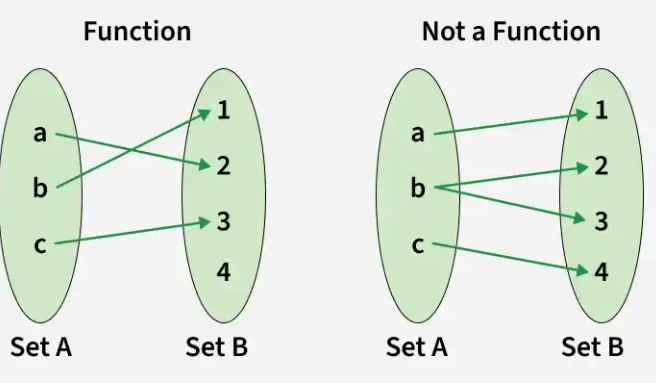
The defining characteristic of a function is consistency. For every input, there is exactly one output. No ambiguity, no variation.
For example, consider a rule like:
f(x) = x + 2
If you input 3, the output is 5. If you input 10, the output is 12. The rule remains constant, and the result is predictable.
This predictability is what makes functions so valuable in mathematics and beyond.
Breaking Down the Core Idea
When people first encounter functions, they often feel overwhelmed by notation. But at its heart, the idea is simple.
- You start with an input (often called x)
- You apply a rule (the function itself)
- You get an output (often called y or f(x))
This structured relationship is the essence of what is a function in math.
Think of it like a recipe. The ingredients are your inputs, the cooking instructions are your rule, and the finished dish is your output.
Inputs and Outputs: The Heart of Functions
Every function revolves around inputs and outputs.
Input (Independent Variable)
The input is the value you choose. It is independent because it does not depend on anything else in the function.
Output (Dependent Variable)
The output depends entirely on the input and the rule applied. Change the input, and the output changes accordingly.
This dependency relationship is key when understanding what is a function in math, because it defines how values interact.
Understanding Function Notation
Function notation may look intimidating at first, but it’s simply a shorthand way of expressing relationships.
For example:
f(x) = 2x + 3
This reads as “f of x equals 2x plus 3.”
It means that whatever value you plug in for x will be doubled and then increased by 3.
If x = 4, then:
f(4) = 2(4) + 3 = 11
Function notation helps organize and communicate mathematical ideas clearly.
Domain and Range Explained Clearly
Two essential concepts tied to functions are domain and range.
Domain
The domain is the set of all possible input values. It defines what you are allowed to put into the function.
Range
The range is the set of all possible outputs. It represents the results you can get from the function.
For example, in the function f(x) = 1/x, the input cannot be zero because division by zero is undefined. So, zero is excluded from the domain.
Grasping domain and range helps deepen your understanding of what is a function in math and ensures you avoid common mistakes.
Different Types of Functions
Functions come in many forms, each with its own characteristics and applications. Understanding these types helps you recognize patterns and solve problems more effectively.
Linear Functions
Linear functions are the simplest type. They produce straight-line graphs and have a constant rate of change.
Example:
f(x) = 3x + 1
This means that for every increase of 1 in x, the output increases by 3.
Quadratic Functions
Quadratic functions involve squared terms and produce parabolic graphs.
Example:
f(x) = x²
These functions are commonly used in physics, especially when dealing with motion and trajectories.
Polynomial Functions
Polynomial functions include multiple terms with different powers of x.
Example:
f(x) = x³ + 2x² + x + 1
They can have multiple turning points and more complex graphs.
Exponential Functions
Exponential functions grow or decay rapidly.
Example:
f(x) = 2^x
They are widely used in finance, population studies, and science.
Rational Functions
Rational functions involve fractions with variables.
Example:
f(x) = 1/x
They often have restrictions and asymptotes in their graphs.
Table: Comparing Common Function Types
| Function Type | Example | Graph Shape | Key Feature |
|---|---|---|---|
| Linear | f(x) = 2x + 1 | Straight line | Constant rate of change |
| Quadratic | f(x) = x² | Parabola | Symmetrical curve |
| Polynomial | f(x) = x³ + x | Variable | Multiple turning points |
| Exponential | f(x) = 2^x | Rapid growth | Increases or decreases quickly |
| Rational | f(x) = 1/x | Hyperbola | Undefined at certain values |
Graphing Functions for Better Understanding

Graphs provide a visual representation of functions.
- The horizontal axis (x-axis) represents inputs
- The vertical axis (y-axis) represents outputs
Each point on the graph corresponds to an input-output pair.
For example, the graph of f(x) = x² forms a U-shaped curve called a parabola.
Visualizing functions this way makes it easier to interpret relationships and patterns, reinforcing the concept of what is a function in math.
The Vertical Line Test
One simple way to determine if a relation is a function is the vertical line test.
Draw a vertical line through the graph.
If the line touches the graph at more than one point, it is not a function.
This works because a function cannot assign multiple outputs to a single input.
One-to-One vs Many-to-One Functions
Functions can behave differently depending on how inputs map to outputs.
One-to-One Functions
Each input corresponds to a unique output, and no two inputs share the same result.
Many-to-One Functions
Different inputs can produce the same output, but each input still has only one output.
This distinction is important when analyzing relationships and is central to understanding what is a function in math.
Functions in Everyday Life
Functions are not just theoretical—they are everywhere around us.
- Temperature conversion (Celsius to Fahrenheit)
- Calculating distance using speed and time
- Budgeting and financial planning
Every time you see a consistent relationship between two quantities, you are witnessing a function in action.
Solving a Function Step by Step
Let’s work through an example.
Given:
f(x) = 2x + 5
Find f(3)
Step 1: Replace x with 3
Step 2: f(3) = 2(3) + 5
Step 3: f(3) = 6 + 5 = 11
This step-by-step approach simplifies problem-solving and builds confidence.
Common Mistakes to Avoid
When learning functions, students often make a few common errors.
- Confusing functions with general equations
- Forgetting domain restrictions
- Misreading graphs
Avoiding these mistakes will strengthen your understanding and help you apply concepts correctly.
Advanced Ideas Built on Functions
Once you understand the basics, you can explore more advanced topics.
Composite Functions
Combining two functions into one.
Inverse Functions
Reversing the effect of a function.
Trigonometric Functions
Used to study angles and periodic patterns.
All of these build upon the foundational idea of what is a function in math.
Quick Recap
Definition: A function assigns exactly one output to each input.
Key Elements: Input, output, rule
Types: Linear, quadratic, polynomial, exponential
Graph Test: Vertical line test
Applications: Science, finance, technology
FAQs About Functions
What is a function in simple words?
A function is a rule that connects each input to exactly one output.
Can a function have two outputs for one input?
No, that would violate the definition of a function.
Why are functions important?
They help model relationships and solve real-world problems.
What is domain in a function?
The domain is the set of all possible input values.
How do you know if something is a function?
Use the vertical line test or check if each input has only one output.
Conclusion: Mastering Functions Step by Step
Understanding what is a function in math is one of the most important steps in learning mathematics. It is not just about formulas—it is about recognizing relationships and patterns in a structured way.
Functions simplify complex ideas, making them easier to analyze and apply. From basic algebra to advanced scientific models, they serve as a powerful tool for problem-solving.
To truly master functions:
Practice regularly with simple examples.
Visualize relationships using graphs.
Apply concepts to real-life situations whenever possible.
With consistent effort and curiosity, functions will become intuitive, and you will gain confidence in tackling more advanced mathematical challenges.
Read More:-