
Introduction
Mathematics is often described as the language of logic, and within this language, certain concepts act like building blocks for everything else. One of the most essential of these is multiplication, and at the core of multiplication lies the idea of a product. If you’ve ever paused and asked yourself, what does product mean in math, you’re taking an important step toward strengthening your mathematical foundation.
At first glance, the idea of a product seems simple—it is the result of multiplying numbers. However, as you explore deeper into mathematics, the concept grows richer and more versatile. Products appear in arithmetic, algebra, geometry, and even advanced fields like calculus and statistics. Understanding this concept clearly will help you approach a wide range of problems with confidence.
In this article, we will explore the meaning of a product from the ground up, moving from basic definitions to real-world applications and more advanced mathematical uses. The goal is not just to define the term, but to make it feel intuitive and practical.
What Is a Product in Mathematics?
To understand what does product mean in math, it helps to begin with the simplest definition. A product is the result obtained when two or more numbers are multiplied together. That’s it at its core—but this simplicity hides a lot of depth.
Consider a basic example:
4 × 3 = 12
In this equation, 4 and 3 are the numbers being multiplied, and 12 is the product. These numbers being multiplied are called factors, and the result is the product.
Multiplication itself can be thought of as repeated addition. When you multiply 4 by 3, you are essentially adding 4 three times:
4 + 4 + 4 = 12
This perspective is especially helpful for beginners, as it connects multiplication to addition, which is usually learned first.
As numbers grow larger or more complex, repeated addition becomes impractical, but the idea still holds conceptually. That’s why understanding products early on makes later topics much easier to grasp.
Breaking Down the Structure of Multiplication
To deepen your understanding of what does product mean in math, it’s useful to look at the structure of a multiplication expression.
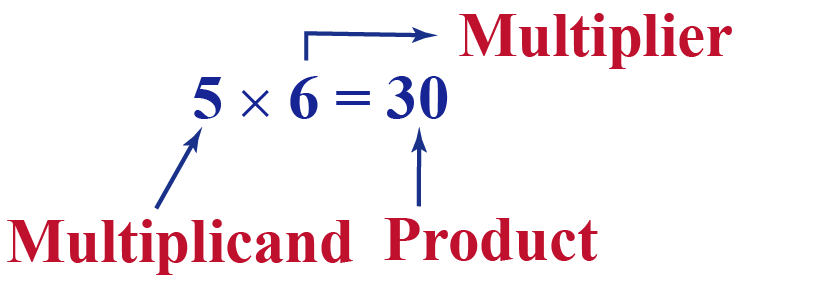
In any multiplication problem, there are three main components:
- The multiplicand (the number being multiplied)
- The multiplier (the number you multiply by)
- The product (the result)
For example:
6 × 5 = 30
Here, 6 is the multiplicand, 5 is the multiplier, and 30 is the product. While these terms are not always emphasized in everyday math, they help clarify the roles each number plays.
Understanding this structure becomes especially important when solving more complex problems, such as algebraic expressions or word problems. It allows you to identify what is being combined and what result you are trying to find.
Why Products Matter in Everyday Mathematics
You might wonder why it’s important to fully understand what does product mean in math beyond just solving multiplication problems. The truth is, products are everywhere.
Whenever you calculate the total cost of items, you are using multiplication. For instance, if one item costs ₹20 and you buy 5 items, you calculate the total by multiplying 20 × 5. The result, ₹100, is the product.
Products also appear in measurements. When you calculate the area of a rectangle, you multiply length by width. When you determine the volume of a box, you multiply length, width, and height. These are all examples of products in action.
Even time and distance calculations involve multiplication. If you travel at a constant speed, the total distance covered is the product of speed and time. These everyday examples show that multiplication is not just a classroom concept—it’s a practical tool used constantly.
Different Types of Products in Mathematics
As you continue exploring what does product mean in math, you’ll notice that products are not limited to whole numbers. They appear in many different forms depending on the type of numbers involved.
Product of Whole Numbers
This is the most basic type of multiplication.
Example: 7 × 8 = 56
Whole numbers are easy to work with and are often the first type introduced to learners.
Product of Fractions
Multiplying fractions involves multiplying the numerators together and the denominators together.
Example: (2/3) × (4/5) = 8/15
This type of product is essential in many real-world calculations, such as dividing resources or measuring quantities.
Product of Decimals
Decimals follow the same multiplication rules, but you must carefully place the decimal point.
Example: 2.5 × 1.2 = 3.0
Understanding decimal products is important for financial calculations and measurements.
Product of Negative Numbers
When negative numbers are involved, the sign of the product depends on the combination:
- Negative × Positive = Negative
- Negative × Negative = Positive
Example: -3 × -4 = 12
This rule is crucial for solving equations and working with real-world data that includes losses or decreases.
Table: Comparing Different Types of Products
| Type of Multiplication | Example | Product | Key Idea |
|---|---|---|---|
| Whole Numbers | 6 × 7 | 42 | Simple repeated addition |
| Fractions | 2/3 × 3/5 | 2/5 | Multiply top and bottom |
| Decimals | 1.5 × 2 | 3.0 | Place decimal correctly |
| Negative Numbers | -4 × 6 | -24 | Signs affect the result |
| Variables | x × x | x² | Product becomes an expression |
This table highlights how the idea of a product adapts across different mathematical contexts.
Properties of Multiplication and Products
To fully understand what does product mean in math, it’s important to explore the properties that govern multiplication. These rules make calculations easier and more predictable.
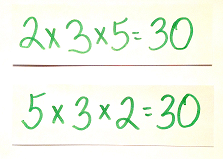
Commutative Property
The order of multiplication does not change the product.
Example: 3 × 5 = 5 × 3
This property is especially useful when simplifying expressions.
Associative Property
The way numbers are grouped does not affect the product.
Example: (2 × 3) × 4 = 2 × (3 × 4)
This allows flexibility in solving multi-step problems.
Identity Property
Multiplying any number by 1 leaves it unchanged.
Example: 9 × 1 = 9
This property helps maintain values in equations.
Zero Property
Any number multiplied by 0 results in 0.
Example: 8 × 0 = 0
This rule is simple but very powerful.
Products in Algebraic Expressions
As mathematics progresses, numbers are often replaced by variables. This is where the idea of a product becomes even more interesting.
For example:
2x × 3 = 6x
Here, the product is not just a number but an expression. Similarly:
(x + 2)(x + 3) = x² + 5x + 6
This type of multiplication involves expanding expressions and combining like terms. It is a key concept in algebra and forms the basis for solving equations.
Understanding products in algebra helps answer more advanced versions of what does product mean in math, especially when dealing with unknown values.
Product vs Sum: Understanding the Difference
A common source of confusion is the difference between a product and a sum.
A sum is the result of addition, while a product is the result of multiplication. For example:
4 + 5 = 9 (sum)
4 × 5 = 20 (product)
Mixing these up can lead to mistakes, especially in word problems. Recognizing the difference ensures accurate calculations.
Products in Geometry and Measurement
Geometry relies heavily on multiplication and products. When you calculate the area of shapes, you are essentially finding products.
For example, the area of a rectangle is found by multiplying its length and width. If a rectangle has a length of 10 units and a width of 5 units, the area is 50 square units.
Volume calculations go a step further by multiplying three dimensions. These applications show how products help us understand space and size in the real world.
Common Mistakes When Working with Products
Even though multiplication seems straightforward, mistakes can happen.
One common error is confusing multiplication with addition. Another is forgetting the rules for negative numbers, which can completely change the result. Misplacing decimals is also a frequent issue when dealing with decimal products.
Being aware of these mistakes helps you avoid them and build confidence in your calculations.
Advanced Insight: Products of Powers
As you move into more advanced math, you’ll encounter powers and exponents.
When multiplying powers with the same base, you add the exponents:
2² × 2³ = 2⁵ = 32
This rule simplifies calculations and is widely used in algebra and beyond.
A product is the result obtained when two or more numbers, variables, or expressions are multiplied together in mathematics.
FAQs
What is a product in simple terms?
A product is the answer you get when you multiply numbers together.
Can a product be negative?
Yes, if one factor is negative, the product will be negative.
What happens when you multiply by zero?
The product is always zero, no matter the number.
Is product used in algebra?
Yes, products are used to combine variables and expressions.
Why is understanding products important?
It helps in solving problems in math and real-life situations like shopping and measurements.
Conclusion
Understanding multiplication is a key step in mastering mathematics, and learning what does product mean in math provides a strong foundation for everything that follows. From simple arithmetic to complex algebra and real-world applications, the concept of a product connects many areas of math in a meaningful way.
By recognizing how products work, applying multiplication rules, and practicing regularly, you can improve both your speed and accuracy. More importantly, you’ll begin to see math not just as numbers on a page, but as a practical tool that helps you make sense of the world.
Keep practicing, stay curious, and use what you’ve learned in everyday situations. Over time, the idea of a product will feel natural—and math itself will become much more approachable and enjoyable.