
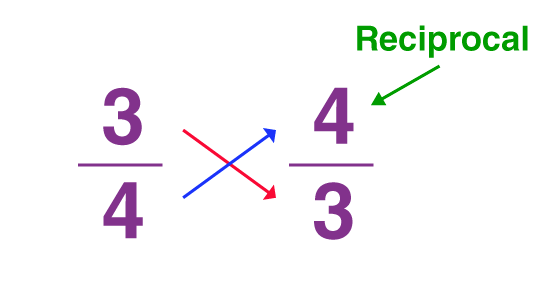
Introduction to Reciprocals in Mathematics
Mathematics is built on patterns, relationships, and transformations, and one such elegant transformation is the idea of reciprocals. At its core, a reciprocal represents a relationship between two numbers that, when multiplied together, produce unity—one of the most important identities in mathematics. Understanding this idea opens doors to clearer thinking in arithmetic, algebra, and even higher-level mathematics.
When we talk about reciprocal meaning maths, we are referring to a concept that may seem small at first but plays a powerful role in simplifying operations and solving equations. It allows us to rethink division, manipulate fractions with ease, and understand inverse relationships in a more intuitive way.
Many students initially encounter reciprocals in school when learning fractions, but the concept continues to evolve as they move into algebra and beyond. This article aims to provide a complete and easy-to-follow explanation of reciprocals, including their definition, properties, applications, and importance in real-world contexts.
What Is a Reciprocal?
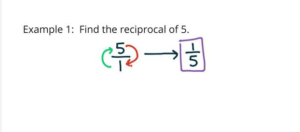
A reciprocal is a number that, when multiplied by the original number, gives a product of exactly 1. In mathematical terms, if you have a number “a,” its reciprocal is “1/a,” provided that “a” is not zero.
To better understand this, consider a simple example. If you take the number 4, its reciprocal is 1/4. When you multiply 4 by 1/4, the result is 1. This relationship defines what a reciprocal is and how it functions.
This simple yet powerful idea forms the foundation of reciprocal meaning maths, allowing us to interpret numbers not just as standalone values but as parts of a balanced system.
Understanding the Concept Through Simple Examples
Let’s look at a few straightforward examples to build clarity.
If you have the number 8, its reciprocal becomes 1/8. Similarly, if you take a fraction like 3/7, its reciprocal becomes 7/3. In both cases, multiplying the number by its reciprocal gives the result of 1.
This concept works consistently across different types of numbers, including whole numbers, fractions, and decimals. The simplicity of flipping a number hides a deeper mathematical truth: reciprocals are multiplicative inverses.
In learning reciprocal meaning maths, it is essential to remember that reciprocals are not about addition or subtraction—they are purely about multiplication.
How to Find the Reciprocal of Different Numbers
Reciprocal of Whole Numbers
For whole numbers, the process is very straightforward. You simply place the number under 1 to form a fraction.
For example, the reciprocal of 6 becomes 1/6. This transformation converts a whole number into a fraction while preserving its relationship with multiplication.
Reciprocal of Fractions
For fractions, the process involves flipping the numerator and denominator. This means that the top number becomes the bottom, and the bottom number becomes the top.
If you take the fraction 5/9, its reciprocal becomes 9/5. This flip is the essence of how reciprocals are formed and understood.
Reciprocal of Decimals
Decimals can also have reciprocals, but they must first be converted into fractions. For instance, 0.2 can be written as 1/5, and its reciprocal becomes 5.
This step-by-step approach ensures that the idea of reciprocal meaning maths remains consistent across all number forms.
The Role of Reciprocals in Multiplication
One of the most important properties of reciprocals is their connection with multiplication. A number multiplied by its reciprocal always equals 1. This is not just a rule but a defining characteristic.
This property is especially useful when solving equations. If a variable is multiplied by a number, you can multiply both sides of the equation by the reciprocal of that number to isolate the variable.
This method simplifies calculations and reduces the chances of error, making reciprocals a valuable tool in mathematics.
Using Reciprocals in Division
Division is often seen as a more complex operation than multiplication, but reciprocals help simplify it significantly. Instead of dividing by a number, you can multiply by its reciprocal.
For example, dividing 10 by 2/5 can be rewritten as multiplying 10 by 5/2. This transformation makes the calculation easier and more intuitive.
This is one of the most practical applications of reciprocal meaning maths, as it turns a potentially confusing operation into a straightforward one.
Table: Understanding Reciprocals with Examples
| Number | Reciprocal | Multiplication Result |
|---|---|---|
| 4 | 1/4 | 1 |
| 7 | 1/7 | 1 |
| 2/3 | 3/2 | 1 |
| 5/8 | 8/5 | 1 |
| 0.5 | 2 | 1 |
This table highlights how reciprocals work across different types of numbers and reinforces the idea that their product is always 1.
Special Cases in Reciprocals
Reciprocal of 1
The number 1 is unique because its reciprocal is also 1. This is because 1 multiplied by itself remains 1.
Reciprocal of Zero
Zero does not have a reciprocal. This is because dividing 1 by zero is undefined in mathematics. This exception is crucial to remember.
Negative Numbers
Negative numbers also have reciprocals, and they remain negative. For example, the reciprocal of -3 is -1/3.
These cases deepen our understanding of reciprocal meaning maths and show that while the concept is simple, it has important rules.
Reciprocals in Algebra
In algebra, reciprocals are used to solve equations efficiently. When a variable is multiplied by a number, multiplying both sides of the equation by the reciprocal of that number helps isolate the variable.
For example, if you have an equation like x/4 = 3, multiplying both sides by 4 gives x = 12. Here, 4 acts as the reciprocal of 1/4.
This technique is widely used in algebra and forms an essential part of equation-solving strategies.
Real-Life Applications of Reciprocals
Reciprocals are not just theoretical—they appear in everyday life more often than we realize.
In cooking, adjusting recipes often involves dividing quantities, where reciprocals simplify the process. In physics, speed is often expressed as distance over time, and reciprocals help convert between different units.
In finance, interest rates and ratios sometimes involve inverse relationships that rely on reciprocals. Understanding reciprocal meaning maths allows individuals to handle such calculations with confidence.
Common Mistakes and Misunderstandings
One common mistake is confusing reciprocals with negative numbers. A reciprocal is not the opposite of a number but its multiplicative inverse.
Another mistake is forgetting to flip both the numerator and denominator when working with fractions. Some students also attempt to find the reciprocal of zero, which is not possible.
Being aware of these errors can help learners avoid confusion and improve their accuracy.
Quick Summary
Definition:
A reciprocal is a number that multiplies with another number to give 1.
Formula:
Reciprocal of a = 1/a (where a ≠ 0)
Key Rule:
Multiplying a number by its reciprocal always equals 1.
Advanced Understanding: Reciprocal Functions

In higher mathematics, reciprocals appear in functions such as f(x) = 1/x. These functions have unique graphs that approach but never touch the axes.
This introduces the idea of asymptotes and helps students understand limits and continuity in calculus.
The concept of reciprocal meaning maths thus extends far beyond basic arithmetic into advanced mathematical theory.
Practice Problems
Try solving the following problems to test your understanding:
- Find the reciprocal of 12
- Find the reciprocal of 3/5
- Solve: 9 ÷ 3/4
Working through such examples helps reinforce the concept and builds confidence.
FAQs About Reciprocals
What is the simplest way to understand reciprocals?
The simplest way is to remember that a reciprocal is a flipped version of a number that multiplies with it to give 1.
Why is zero excluded from reciprocals?
Because division by zero is undefined, and reciprocals involve division.
Do all numbers have reciprocals?
All non-zero numbers have reciprocals.
How are reciprocals used in real life?
They are used in cooking, physics, finance, and everyday calculations involving division.
Is the reciprocal always smaller than the original number?
Not always. For fractions less than 1, the reciprocal is greater than 1.
Conclusion
Reciprocals are one of those mathematical concepts that combine simplicity with powerful utility. From flipping fractions to simplifying division and solving equations, they provide a consistent and reliable method for handling numbers.
By understanding the reciprocal meaning maths, learners can improve their problem-solving skills and approach mathematical challenges with greater confidence. The concept may begin with basic arithmetic, but its applications extend into algebra, science, and real-world scenarios.
To truly master reciprocals, consistent practice is key. Work with different types of numbers, explore their inverses, and apply them in everyday situations. Over time, this simple idea will become a natural part of your mathematical thinking, helping you solve problems faster and more accurately.
Mathematics becomes easier when its core ideas are clear—and reciprocals are one of those ideas worth mastering.
Read More:-Understanding Mean in Mathematics: Simple Guide for Beginners Tips