Introduction to Congruence in Mathematics
Mathematics is full of ideas that help us understand patterns, shapes, and relationships in the world around us. One such fundamental idea is congruence. Whether you are studying basic geometry or solving advanced mathematical problems, congruence plays an essential role in helping you compare and analyze shapes accurately.
When students first encounter this topic, they often wonder what is the meaning of congruent in maths and why it matters so much. At its core, congruence is about exact equality—not just similarity, but perfect matching in both shape and size.
Imagine placing one shape over another and finding that they align perfectly without any gaps or overlaps. That perfect match is what mathematicians call congruence. This idea might sound simple at first, but it becomes incredibly powerful when applied to triangles, transformations, proofs, and even real-world applications like engineering and design.
In this article, we will explore congruence in depth, breaking it down into easy-to-understand sections. By the end, you will not only understand the concept clearly but also be able to apply it confidently in different situations.
What Does Congruent Mean in Mathematics?

To truly understand what is the meaning of congruent in maths, we need to start with a precise definition.
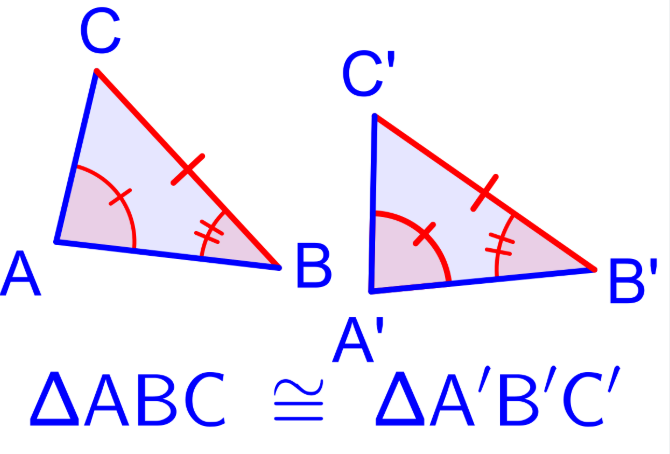
In mathematics, two figures are said to be congruent if they have exactly the same shape and size. This means that every side and every angle in one figure matches the corresponding side and angle in the other figure.
It is important to note that position does not matter. A shape can be moved, rotated, or flipped, and it will still remain congruent as long as its dimensions do not change.
For example, consider two triangles drawn on paper. If one triangle can be placed exactly over the other so that all sides and angles coincide, then the triangles are congruent. This idea forms the foundation of many geometric principles.
The symbol used to represent congruence is “≅”. For instance, if triangle ABC is congruent to triangle DEF, we write it as:
ABC ≅ DEF
This simple notation carries a powerful meaning—it tells us that the two triangles are identical in every measurable way.
Key Characteristics of Congruent Figures
Understanding congruence becomes easier when you focus on its defining characteristics. These properties help you identify whether two shapes are truly congruent or not.
Equal Side Lengths
For two figures to be congruent, all corresponding sides must have the same length. Even a small difference in measurement means the shapes are no longer congruent.
This requirement ensures that the overall size of the figures is identical.
Equal Angles
In addition to equal sides, all corresponding angles must also be equal. This guarantees that the shapes are not only the same size but also have the same structure.
Without equal angles, shapes may look similar but will not qualify as congruent.
Exact Shape and Size
Congruence demands perfection in both shape and size. Unlike similarity, which allows scaling, congruence does not permit any enlargement or reduction.
This is why congruent figures are often described as “exact copies” of each other.
Independence from Position
A key feature of congruence is that it does not depend on where a shape is located or how it is oriented. A figure can be rotated, reflected, or translated, and it will still remain congruent as long as its dimensions stay the same.
These characteristics provide a complete answer to what is the meaning of congruent in maths by highlighting the strict conditions required for congruence.
Congruent Shapes vs Similar Shapes
One of the most common areas of confusion in geometry is the difference between congruent and similar shapes. While the two concepts are related, they are not the same.
| Feature | Congruent Shapes | Similar Shapes |
|---|---|---|
| Size | Exactly the same | Can be different |
| Shape | Exactly the same | Same shape only |
| Angles | Equal | Equal |
| Side Lengths | Equal | Proportional |
| Scaling Allowed | No | Yes |
| Example | Identical triangles | Enlarged triangle |
This comparison makes it clear that congruence is a stricter condition than similarity. While similar shapes maintain the same proportions, congruent shapes must match perfectly in every aspect.
Congruence in Triangles
Triangles are the most commonly studied shapes when it comes to congruence. This is because they are simple yet powerful tools for understanding geometric relationships.
To determine whether two triangles are congruent, mathematicians use specific rules known as congruence criteria.
SSS (Side-Side-Side) Rule
If all three sides of one triangle are equal to the corresponding sides of another triangle, then the triangles are congruent.
This is one of the most straightforward ways to prove congruence.
SAS (Side-Angle-Side) Rule
If two sides and the angle between them are equal in both triangles, then the triangles are congruent.
The included angle plays a crucial role in this rule.
ASA (Angle-Side-Angle) Rule
If two angles and the side between them are equal, the triangles are congruent.
This ensures both shape and size are identical.
AAS (Angle-Angle-Side) Rule
If two angles and a non-included side are equal, congruence can still be established.
The third angle automatically becomes equal due to the properties of triangles.
RHS (Right Angle-Hypotenuse-Side) Rule
This rule applies only to right-angled triangles. If the hypotenuse and one side are equal, the triangles are congruent.
These rules form an essential part of understanding what is the meaning of congruent in maths in a practical and problem-solving context.
Transformations That Preserve Congruence
Congruence is closely related to transformations that do not change the size or shape of a figure. These transformations help us visualize how congruent shapes can appear in different positions.
Translation
Translation involves moving a shape from one place to another without rotating or flipping it. The shape remains exactly the same.
Rotation
Rotation means turning a shape around a fixed point. Even after rotation, the figure remains congruent to its original form.
Reflection
Reflection creates a mirror image of a shape across a line. Despite the reversal, the shape remains congruent.
These transformations demonstrate that congruence is independent of orientation, reinforcing the idea behind what is the meaning of congruent in maths.
Real-Life Applications of Congruence
Congruence is not just a theoretical concept—it has many practical applications in everyday life.
Architecture and Construction
Builders rely on congruent shapes to ensure that structures are stable and symmetrical. Identical components make construction more efficient and reliable.
Manufacturing
In factories, products are often made using molds or templates. These ensure that each item produced is congruent to the others.
Art and Design
Artists and designers use congruence to create balanced and visually appealing patterns. Repeating identical shapes adds harmony to designs.
Technology and Graphics
Computer graphics rely heavily on congruence to maintain consistency in shapes and objects. This is especially important in animations and video games.
These examples highlight how the concept extends far beyond the classroom.
Congruence in Coordinate Geometry
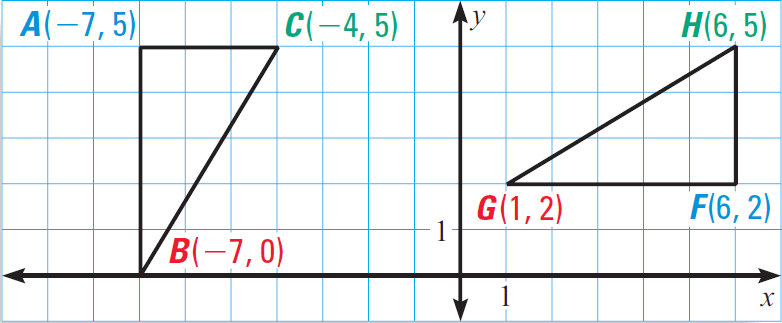
In coordinate geometry, congruence is verified using mathematical calculations rather than visual comparison.
The distance between points is calculated to check whether corresponding sides are equal. Similarly, slopes can be used to compare angles.
This analytical approach provides a deeper understanding of what is the meaning of congruent in maths, especially in advanced studies.
Congruence in Three-Dimensional Figures
While congruence is often introduced using two-dimensional shapes, it also applies to three-dimensional objects.
Two cubes are congruent if they have the same edge length. Similarly, spheres are congruent if their radii are equal.
Cylinders, cones, and other 3D shapes follow the same principle—matching dimensions result in congruence.
This extension into three dimensions shows the versatility of the concept.
Common Mistakes and Misconceptions
Students often make errors when learning about congruence. Recognizing these mistakes can help avoid confusion.
Confusing Similarity with Congruence
Many assume that similar shapes are congruent, which is not true. Similar shapes can differ in size.
Ignoring Orientation
Some believe that rotated or flipped shapes are different. In reality, they can still be congruent.
Partial Matching
Matching only sides or only angles is not enough. Both must be equal for true congruence.
Addressing these misconceptions strengthens your understanding of what is the meaning of congruent in maths.
Step-by-Step Approach to Check Congruence
To determine whether two figures are congruent, follow a systematic approach.
First, compare all corresponding sides to ensure they are equal. Next, check all corresponding angles.
Then, apply the appropriate congruence rule, especially for triangles. Finally, consider whether a transformation can align the figures perfectly.
This method ensures accuracy and clarity in solving problems.
Quick Summary
Definition:
Congruent figures have exactly the same shape and size.
Symbol:
≅
Key Requirement:
Equal sides and equal angles.
Transformations Allowed:
Translation, rotation, reflection.
Common Use:
Geometry, proofs, construction, design.
FAQs About Congruence in Maths
1. What is the meaning of congruent in maths in simple terms?
It means two shapes are exactly the same in both size and shape, even if they are placed differently.
2. Can shapes be congruent if they are rotated?
Yes, rotation does not affect congruence as long as size and shape remain unchanged.
3. Are congruent shapes always similar?
Yes, congruent shapes are always similar, but similar shapes are not always congruent.
4. What symbol is used for congruence?
The symbol “≅” is used to represent congruence in mathematics.
5. Why is congruence important?
It helps in solving geometric problems, proving theorems, and ensuring accuracy in design and construction.
Conclusion: Bringing It All Together
Understanding what is the meaning of congruent in maths is a crucial step in mastering geometry. It introduces the idea of exact equality, which is essential for analyzing shapes and solving problems accurately.
Congruence teaches us that two figures can be identical in every measurable way, regardless of their position or orientation. From triangle rules to real-world applications, this concept forms the backbone of many mathematical and practical fields.
To strengthen your understanding, practice identifying congruent shapes, apply the rules regularly, and visualize transformations. With consistent effort, the concept will become second nature.
Mathematics becomes much more intuitive when you understand its foundational ideas, and congruence is certainly one of the most important among them.