
Introduction
Mathematics is often described as a language, and like any language, it has its own structure, grammar, and building blocks. One of the most essential building blocks in this system is the concept of a “term.” If you are beginning your journey in algebra or revisiting basic concepts, understanding what is term in maths is one of the most important steps you can take.
At first glance, mathematical expressions may seem complicated, filled with numbers, letters, and symbols. However, once you break them down into smaller parts, they become much easier to understand. These smaller parts are called terms. They help us organize expressions, simplify problems, and eventually solve equations.
In this comprehensive guide, we will explore the concept of terms in detail. You will learn their definition, structure, types, real-life importance, and how they are used in different areas of mathematics. By the end of this article, you will have a clear and confident understanding of how terms function and why they matter.
What Is a Term in Mathematics?
:max_bytes(150000):strip_icc()/GettyImages-130895397-57a530aa5f9b58974ab7a0cb.jpg)
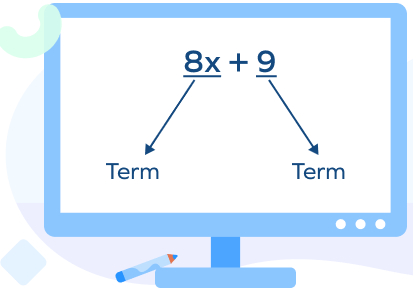
To understand what is term in maths, think of a term as a single piece of a mathematical expression. It can be a number, a variable, or a combination of both connected through multiplication or division. Terms are always separated by addition or subtraction signs.
For example, consider the expression:
6x + 4y − 9
In this case, the expression is made up of three terms: 6x, 4y, and −9. Each of these parts stands alone and contributes to the overall expression.
A term does not include addition or subtraction within itself. Instead, these operations are used to separate different terms. This distinction is crucial because it helps us identify and work with each part of an expression effectively.
Understanding the Structure of a Term
Every term in mathematics has a structure that defines its meaning and role. While some terms are simple numbers, others may include variables and exponents. Understanding this structure makes it easier to analyze expressions.
Coefficient
The coefficient is the numerical part of a term. It tells us how many times a variable is being multiplied.
For example, in the term 8x, the number 8 is the coefficient. Even if a number is not written, it is assumed to be 1. So, x is the same as 1x.
Variable
A variable is a symbol, usually a letter, that represents an unknown or changing value. Variables allow us to generalize mathematical relationships.
For instance, in 5y, the letter y is the variable.
Exponent
An exponent indicates how many times a variable is multiplied by itself. It adds another layer of complexity to a term.
For example, in x², the exponent 2 means x is multiplied by itself once.
Constant
A constant is a term that has no variables. It is simply a fixed numerical value, such as 7 or −3.
Understanding these components helps clarify what is term in maths and how each term contributes to an expression.
Types of Terms in Mathematics
Terms can be classified into different types based on their characteristics. This classification helps in simplifying expressions and solving equations.
Constant Terms
Constant terms are numbers that do not contain any variables. They remain unchanged regardless of the values of variables in the expression.
Examples include 5, −10, and 100.
Variable Terms
Variable terms include at least one variable and may also have coefficients.
Examples include 3x, −7y, and 2ab.
Like Terms
Like terms are terms that have the same variables raised to the same powers. These terms can be combined through addition or subtraction.
For example, 4x and 9x are like terms because both contain the variable x raised to the same power.
Unlike Terms
Unlike terms have different variables or different exponents. These cannot be combined directly.
For instance, x and x² are unlike terms because their exponents differ.
Table: Understanding Different Types of Terms
| Category | Description | Example |
|---|---|---|
| Constant Term | Contains only numbers | 8, −3, 50 |
| Variable Term | Includes variables and coefficients | 5x, −2y |
| Like Terms | Same variables with same powers | 3x, 7x |
| Unlike Terms | Different variables or powers | x, y, x² |
This table provides a quick comparison to reinforce your understanding.
Terms in Algebraic Expressions
Algebraic expressions are combinations of terms connected by addition or subtraction. These expressions form the foundation of algebra.
For example:
5x + 3x − 2
This expression contains three terms. Since 5x and 3x are like terms, they can be combined:
8x − 2
This simplification shows how understanding terms makes mathematical operations easier and more efficient.
When working with expressions, identifying terms is the first step toward solving problems. Without recognizing terms, it would be difficult to simplify or manipulate expressions.
Why Terms Are Important in Mathematics

Understanding what is term in maths is not just about definitions—it has practical importance in learning and applying mathematics.
Simplifying Expressions
Terms allow us to break down complex expressions into smaller parts. By combining like terms, we can simplify problems and make them easier to solve.
Solving Equations
Equations rely on balancing terms on both sides. Recognizing terms helps in rearranging equations and finding unknown values.
Building Algebra Skills
A strong understanding of terms lays the foundation for advanced topics like polynomials, calculus, and beyond.
Improving Logical Thinking
Working with terms enhances analytical and problem-solving skills, which are useful in many areas of life.
Examples to Strengthen Understanding
Let’s explore a few examples to better understand how terms work in practice.
Example 1
Expression: 7x + 2 − 3x
Terms: 7x, 2, −3x
Combine like terms:
4x + 2
Example 2
Expression: 9a² − 5a + 6
Terms: 9a², −5a, 6
Since these are unlike terms, they cannot be combined further.
Example 3
Expression: 4 + 8
Terms: 4, 8
These are constant terms and can be added:
12
Like Terms vs Unlike Terms in Detail
Understanding the difference between like and unlike terms is essential for simplifying expressions.
Like terms share identical variable parts, which means they can be combined easily. For instance, 6x and 2x can be added to form 8x.
Unlike terms, on the other hand, differ in variables or exponents. For example, 3x and 4y cannot be combined because they represent different quantities.
This distinction is crucial when learning what is term in maths, as it directly affects how expressions are simplified.
How to Identify Terms in Any Expression
Identifying terms is a simple process once you understand the rules.
Start by looking for addition and subtraction signs. These symbols act as separators between terms. Each segment of the expression divided by these signs is considered a term.
For example:
10x − 4y + 6
The terms are 10x, −4y, and 6.
It is important to include the sign with the term that follows it. For instance, −4y is a single term, not two separate parts.
Real-Life Applications of Terms
Mathematics is not limited to textbooks. The concept of terms is used in many real-life situations.
In budgeting, terms help represent different expenses and incomes. For example, rent, groceries, and utilities can each be represented as separate terms in an expression.
In science and engineering, formulas often consist of multiple terms that represent different physical quantities. Understanding these terms helps in analyzing and solving real-world problems.
In data analysis, terms are used in equations that model trends and relationships. This allows professionals to make predictions and informed decisions.
Common Mistakes Students Should Avoid
While learning what is term in maths, students often make a few common mistakes.
One frequent error is confusing terms with factors. A term is a part of an expression, while factors are multiplied within a term. For example, in 6xy, 6, x, and y are factors, but together they form a single term.
Another mistake is combining unlike terms. Students sometimes try to add terms that cannot be combined, such as 3x and 4y.
Ignoring negative signs is also a common issue. The sign is part of the term and must always be considered during calculations.
A term in mathematics is a single part of an expression, which may include numbers, variables, or both, and is separated by addition or subtraction signs.
Practice Questions
Try solving these problems to test your understanding:
- Identify the terms in: 6x + 4 − 2x
- Simplify: 3y + 7y − 5
- Classify the terms in: 8a² + 3a + 1
Practicing regularly will strengthen your understanding and improve your confidence.
Advanced Concepts Involving Terms
As you progress in mathematics, the concept of terms becomes more advanced.
Polynomials are expressions made up of multiple terms. Each term contributes to the overall structure of the polynomial.
In higher algebra, terms may include complex variables and exponents. Despite this complexity, the basic definition of a term remains the same.
In calculus, terms appear in series and expansions, where each term plays a role in approximating functions.
Why Mastering Terms Is Essential Early On
Learning what is term in maths at an early stage builds a strong foundation for future learning.
It helps students understand algebra more easily and prepares them for advanced topics. It also improves problem-solving skills and logical reasoning.
Students who master this concept find it easier to tackle complex equations and mathematical challenges.
FAQs
What is a term in maths in simple language?
A term is a single part of a mathematical expression separated by plus or minus signs.
Can a term have multiple variables?
Yes, a term can include more than one variable, such as 3xy.
What are like terms?
Like terms are terms that have the same variables raised to the same powers.
Are constants considered terms?
Yes, constants are also terms because they are standalone parts of an expression.
Why is understanding terms important?
It helps in simplifying expressions, solving equations, and building strong mathematical skills.
Conclusion
Understanding what is term in maths is one of the most important steps in learning mathematics. Terms are the building blocks of expressions and equations, and they play a crucial role in simplifying and solving problems.
By learning how to identify, classify, and work with terms, you gain a powerful tool that makes mathematics easier and more approachable. From basic arithmetic to advanced algebra, the concept of terms remains relevant and essential.
Start practicing today by breaking down expressions into terms and identifying like and unlike terms. With consistent practice, you will develop confidence and mastery, making even complex mathematical problems feel manageable.
Read More:-Understanding Reciprocals in Math: Concepts and Examples