
Introduction
Mathematics is one of the most important subjects in education and everyday life. It provides a framework for logical thinking, problem-solving, and understanding the world around us. From calculating expenses and measuring distances to designing advanced technologies and conducting scientific research, mathematics plays a vital role in nearly every aspect of modern society. To fully understand mathematics, it is essential to explore its core components. These components work together to create a comprehensive system that helps learners develop analytical skills and numerical confidence.
The study of the components of math helps students recognize how different mathematical concepts connect and support one another. Whether someone is learning basic arithmetic or advanced calculus, understanding these foundational elements can improve comprehension and performance. Modern digital tools such as delta math and maths solver platforms have also made learning these components easier by providing interactive exercises, instant feedback, and personalized guidance.
What Are the Components of Math?
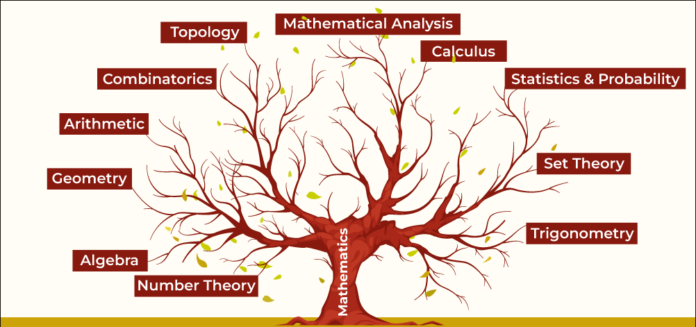
The components of math are the fundamental areas and concepts that collectively form the discipline of mathematics. Each component serves a specific purpose and contributes to the development of mathematical understanding. These areas range from simple number operations to complex analytical reasoning.
Mathematics is not a single concept but a collection of interconnected branches. These branches help individuals solve different types of problems and understand various patterns, relationships, and structures. By mastering the components of math, students can build a strong foundation that supports higher-level learning and practical applications.
Educational systems around the world organize mathematics into distinct components to ensure systematic learning. This approach allows learners to gradually develop skills and knowledge while gaining confidence in handling increasingly complex mathematical challenges.
Main Components of Math
The following table highlights the major components of mathematics and their primary purposes.
| Component | Purpose |
|---|---|
| Arithmetic | Basic calculations and number operations |
| Algebra | Understanding relationships using variables |
| Geometry | Studying shapes, sizes, and spatial relationships |
| Measurement | Quantifying length, weight, volume, and time |
| Statistics | Collecting and analyzing data |
| Probability | Predicting likelihood of events |
| Calculus | Studying change and motion |
| Logic and Reasoning | Developing analytical thinking skills |
Each component contributes uniquely to mathematical literacy and problem-solving abilities.
Arithmetic: The Foundation of Mathematics
Arithmetic is often considered the first and most fundamental component of math. It involves working with numbers through basic operations such as addition, subtraction, multiplication, and division. These skills are introduced early in education and remain essential throughout life.
Arithmetic helps individuals perform everyday tasks such as budgeting, shopping, cooking, and managing finances. It also serves as the basis for more advanced mathematical concepts. Without a strong understanding of arithmetic, students may struggle with algebra, geometry, and higher-level mathematics.

Digital learning platforms, including delta math, frequently provide arithmetic practice exercises that reinforce foundational skills. These interactive tools allow learners to strengthen their numerical fluency and accuracy through repeated practice and instant feedback.
Arithmetic develops confidence in working with numbers and prepares students for more complex mathematical challenges. As a result, it remains one of the most important components of math.
Algebra: Understanding Mathematical Relationships
Algebra introduces variables and symbols to represent unknown values and relationships. This component allows mathematicians and students to solve equations, identify patterns, and model real-world situations.
Algebra moves beyond simple calculations by encouraging abstract thinking. Students learn how to manipulate equations, simplify expressions, and solve problems involving unknown quantities. These skills are essential in fields such as engineering, economics, computer science, and physics.
Many learners use maths solver applications to verify algebraic solutions and understand problem-solving methods. Such tools provide step-by-step explanations that help students grasp underlying concepts rather than merely finding answers.
Algebra strengthens logical reasoning and analytical thinking. By understanding how variables interact within equations, students gain valuable problem-solving skills that can be applied in numerous academic and professional contexts.
Geometry: Exploring Shapes and Space
Geometry focuses on the study of shapes, sizes, angles, and spatial relationships. It helps individuals understand the physical world by examining the properties of two-dimensional and three-dimensional figures.
This component includes concepts such as points, lines, triangles, circles, polygons, and solids. Geometry is used extensively in architecture, engineering, construction, graphic design, and navigation. Understanding geometric principles allows professionals to create accurate designs and structures.
Students often find geometry engaging because it combines visual learning with mathematical reasoning. Interactive platforms like delta math provide geometry exercises that allow learners to visualize concepts and practice solving geometric problems effectively.
Geometry develops spatial awareness and critical thinking. By studying patterns and relationships among shapes, students gain valuable insights into the structure and organization of the world around them.
Measurement: Quantifying the World
Measurement is a practical component of math that involves determining dimensions, quantities, and capacities. It includes concepts such as length, area, volume, weight, temperature, and time.
Measurement skills are essential in daily life. Whether calculating travel distances, measuring ingredients, or evaluating construction materials, individuals rely on measurement to make informed decisions. Accurate measurement is also critical in scientific experiments and industrial processes.
Learning measurement helps students understand units, conversions, and estimation techniques. It bridges the gap between abstract mathematical concepts and real-world applications. Educational programs often integrate measurement activities to demonstrate how mathematics is used outside the classroom.
Strong measurement skills contribute to precision, accuracy, and problem-solving abilities, making this component an important part of mathematical education.
Statistics: Making Sense of Data
Statistics involves collecting, organizing, analyzing, and interpreting data. In today’s information-driven world, statistical literacy is more important than ever. Businesses, governments, researchers, and healthcare organizations rely on statistics to make informed decisions.
Students learn how to create charts, calculate averages, identify trends, and interpret data sets. These skills help individuals evaluate information critically and draw meaningful conclusions.
Modern maths solver tools frequently include statistical functions that assist learners in understanding data analysis techniques. Such resources make complex statistical concepts more accessible and easier to practice.
Statistics develops critical thinking and evidence-based reasoning. By learning how to analyze data accurately, students become better equipped to navigate a world increasingly influenced by information and analytics.
Probability: Predicting Outcomes
Probability is the branch of mathematics that studies uncertainty and likelihood. It helps individuals estimate the chances of events occurring and make predictions based on available information.
Probability is used in numerous fields, including finance, insurance, weather forecasting, sports analytics, and scientific research. Understanding probability enables individuals to assess risks and make informed decisions.
Students learn concepts such as outcomes, events, fractions, percentages, and probability distributions. These ideas provide valuable insights into how randomness and uncertainty influence everyday situations.
Many educational platforms, including delta math, offer probability exercises that help students develop intuition and confidence when working with uncertain outcomes. This component strengthens analytical reasoning and decision-making skills.
Calculus: Understanding Change and Motion
Calculus is an advanced component of math that focuses on change, motion, and rates of variation. It is divided into differential calculus and integral calculus, each addressing different mathematical challenges.
Calculus plays a central role in science, engineering, economics, and technology. It helps researchers model dynamic systems, optimize processes, and understand natural phenomena. Applications range from predicting population growth to designing spacecraft trajectories.
Although calculus can be challenging, it builds upon concepts learned in algebra and geometry. Students who develop strong foundational skills often find it easier to understand advanced calculus topics.
The study of calculus demonstrates the power and versatility of mathematics in solving complex real-world problems.
Logic and Mathematical Reasoning
Logic and reasoning are often overlooked but essential components of math. These skills involve analyzing information, identifying patterns, and drawing valid conclusions based on evidence.
Mathematical reasoning enables students to justify their answers and explain problem-solving processes. Rather than simply memorizing formulas, learners develop a deeper understanding of why mathematical methods work.
Tools like maths solver can support logical thinking by showing step-by-step solutions and encouraging students to follow structured reasoning processes. This approach promotes conceptual understanding rather than rote memorization.
Strong reasoning skills benefit students across all academic disciplines and support effective decision-making in everyday life.
Benefits of Understanding the Components of Math
Learning the components of math provides numerous advantages:
- Improves problem-solving abilities
- Enhances logical thinking
- Strengthens analytical skills
- Supports academic success
- Develops decision-making capabilities
- Increases confidence with numbers
- Prepares students for advanced studies
- Facilitates real-world applications
These benefits extend beyond the classroom and contribute to lifelong learning and professional growth.
How Technology Supports Mathematical Learning
Technology has transformed mathematics education by providing innovative learning tools and resources. Interactive platforms, online tutorials, and digital assessment systems make mathematics more accessible and engaging.
For example, delta math offers personalized practice activities that help students master various mathematical concepts. Similarly, maths solver applications provide instant solutions and explanations that support independent learning.
Technology allows students to learn at their own pace, receive immediate feedback, and explore mathematical concepts through interactive experiences. As educational technology continues to evolve, it will play an increasingly important role in helping learners understand the components of math.
Conclusion
The components of math form the foundation of mathematical understanding and practical problem-solving. Arithmetic, algebra, geometry, measurement, statistics, probability, calculus, and logical reasoning each contribute unique skills that help individuals interpret and navigate the world around them. Together, these components create a comprehensive framework that supports academic achievement, professional success, and everyday decision-making.
Modern educational tools such as delta math and maths solver have made learning mathematics more accessible and effective than ever before. By mastering the essential components of math, students can build confidence, develop critical thinking skills, and prepare for future challenges in an increasingly data-driven and technology-focused world.