
Introduction
When students begin exploring mathematics, they encounter many important concepts that help them understand numbers, patterns, and relationships. One of these essential concepts is the range. Understanding how to define range in math is important because it appears in statistics, algebra, graphs, and real-world problem-solving. The range helps us understand how spread out a set of numbers is and provides valuable information about data distribution.
In simple terms, the range is the difference between the largest and smallest values in a dataset. Although this concept appears straightforward, it plays a significant role in analyzing information and comparing different sets of data. Whether students are using classroom exercises, educational tools, or platforms like delta math and maths solver applications, the concept of range frequently appears in practice problems and assessments.
This guide explains how to define range in math, explores examples, discusses applications, and shows why this simple measurement remains valuable across many mathematical disciplines.
What Does Range Mean in Mathematics?
To define range in math, we can say that range is a measure of dispersion that indicates how far apart the highest and lowest values are in a dataset. It provides a quick overview of the spread of numbers.
The formula for range is:
Range = Highest Value − Lowest Value
For example, consider the following dataset:
3, 5, 8, 12, 15
The highest value is 15 and the lowest value is 3.
Range = 15 − 3 = 12
This means the numbers are spread across an interval of 12 units. Understanding this spread allows mathematicians and students to evaluate how varied a dataset is. Educational platforms such as delta math often include exercises involving range because it helps build foundational statistical knowledge. Likewise, a maths solver can quickly calculate range while helping students understand the underlying concept.
The simplicity of the calculation makes range one of the first measures of variability introduced in mathematics education.
Why Is Range Important?
Range is important because it provides a quick method for understanding data variation. While averages tell us about the center of a dataset, range tells us how widely the values are distributed.

Imagine two classes taking the same examination:
Class A Scores:
70, 72, 73, 75, 76
Class B Scores:
50, 65, 75, 85, 100
Both classes may have similar average scores, but their ranges differ significantly. Class A has a small range, indicating consistent performance, while Class B has a large range, indicating greater variability.
Some reasons range is important include:
- Helps measure data spread.
- Supports statistical analysis.
- Enables comparison between datasets.
- Identifies unusual values.
- Assists in decision-making.
Students often encounter these concepts when working through exercises on delta math platforms or when checking answers using a maths solver. Understanding range strengthens analytical thinking and prepares learners for more advanced statistical measures.
Formula Used to Calculate Range
The formula for range is straightforward and easy to remember.
| Component | Meaning |
|---|---|
| Maximum Value | Largest number in dataset |
| Minimum Value | Smallest number in dataset |
| Range | Maximum − Minimum |
Example:
Dataset:
10, 14, 18, 22, 30
Maximum Value = 30
Minimum Value = 10
Range = 30 − 10
Range = 20
The formula remains consistent regardless of dataset size. Whether there are five numbers or five thousand, the process is always the same.
Students using delta math frequently solve similar problems, while a maths solver can verify calculations and reinforce learning through instant feedback.
Step-by-Step Process to Find Range
Finding the range involves only a few simple steps.
Step 1: Arrange the Numbers
Organize the data from smallest to largest.
Example:
18, 5, 22, 9, 14
Becomes:
5, 9, 14, 18, 22
Step 2: Identify the Lowest Number
The smallest value is 5.
Step 3: Identify the Highest Number
The largest value is 22.
Step 4: Subtract
Range = 22 − 5
Range = 17
Following these steps ensures accurate calculations. Many educational tools, including delta math exercises and maths solver applications, guide students through this exact process to improve understanding and confidence.
Examples of Range in Math
Examples help clarify the concept.
Example 1
Dataset:
4, 8, 10, 15, 20
Range = 20 − 4
Range = 16
Example 2
Dataset:
25, 30, 35, 40, 45
Range = 45 − 25
Range = 20
Example 3
Dataset:
100, 120, 140, 160, 180
Range = 180 − 100
Range = 80
These examples demonstrate that the calculation method never changes. Students often encounter similar exercises through delta math assignments and use a maths solver to check results and identify mistakes.
Repeated practice helps build familiarity with range calculations and strengthens mathematical reasoning.
Range in Statistics
In statistics, range serves as one of the simplest measures of variability. Researchers use it to understand how dispersed data values are.
Consider daily temperatures:
22°C, 24°C, 26°C, 29°C, 31°C
Range = 31 − 22
Range = 9°C
This tells us the temperatures varied by nine degrees during the observed period.
Range is particularly useful because:
- It is easy to calculate.
- It provides quick insights.
- It helps summarize large datasets.
- It supports comparative analysis.
Although statisticians often use more advanced measures like variance and standard deviation, the range remains an important starting point. Educational platforms such as delta math introduce these concepts gradually, and many maths solver tools include statistical functions for quick analysis.
Range in Functions and Graphs
The word “range” has another meaning in mathematics when discussing functions.
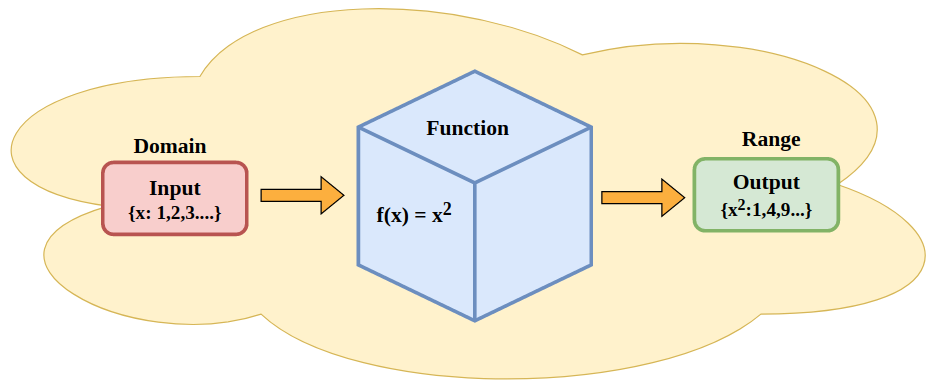
For functions, range refers to all possible output values produced by the function.
Consider:
y = x²
If x can be any real number:
Possible y-values are:
0, 1, 4, 9, 16, and so on.
The range is:
y ≥ 0
This means the output values can never be negative.
Understanding function range helps students analyze graphs and equations. Many delta math lessons focus on identifying function ranges, while a maths solver can graph equations and display output intervals visually.
This interpretation differs from statistical range but remains equally important in mathematics.
Real-Life Applications of Range
Range appears in many real-world situations.
Education
Teachers analyze score ranges to evaluate classroom performance.
Sports
Coaches compare athlete performances over multiple events.
Weather Forecasting
Meteorologists examine temperature ranges to predict conditions.
Business
Companies assess sales ranges to identify trends.
Healthcare
Medical professionals monitor ranges of measurements such as blood pressure or heart rate.
These practical applications demonstrate why learning how to define range in math matters beyond the classroom. Modern educational tools, including delta math resources and maths solver platforms, often incorporate real-world examples to make learning more meaningful.
Advantages and Limitations of Range
Like every mathematical measure, range has strengths and weaknesses.
| Advantages | Limitations |
| Easy to calculate | Uses only two values |
| Quick understanding of spread | Sensitive to outliers |
| Useful for comparisons | May not represent entire dataset |
| Beginner-friendly | Less reliable for complex analysis |
Because range considers only the smallest and largest values, extreme numbers can significantly affect results. Therefore, statisticians often combine range with other measures for deeper analysis.
Even with these limitations, delta math exercises and maths solver tools continue to use range extensively because it introduces students to the concept of variability in an accessible way.
Common Mistakes When Finding Range
Students sometimes make errors when calculating range.
Common mistakes include:
- Forgetting to identify the largest value.
- Using the wrong subtraction order.
- Ignoring negative numbers.
- Confusing range with average.
- Misinterpreting function range and statistical range.
For example:
Dataset:
−10, −5, 0, 8, 15
Range = 15 − (−10)
Range = 25
Students occasionally calculate 15 − 10 instead, producing an incorrect answer.
Practice through delta math activities and checking work with a maths solver can help eliminate these errors and improve accuracy.
Tips for Mastering Range Calculations
Students can improve their understanding of range through consistent practice.
Helpful tips include:
- Always sort data first.
- Identify minimum and maximum values carefully.
- Double-check subtraction.
- Practice with positive and negative numbers.
- Solve real-world problems involving data.
- Compare multiple datasets.
Developing these habits creates a strong foundation for statistics and algebra. Many learners use delta math resources and a maths solver to gain additional practice and immediate feedback.
Over time, range calculations become second nature, allowing students to focus on deeper mathematical concepts.
Conclusion
Understanding how to define range in math is an essential step in developing strong mathematical and statistical skills. Range measures the spread between the highest and lowest values in a dataset, offering a quick and simple way to evaluate variability. From classroom exercises and examination scores to weather reports and business analytics, range remains a practical and widely used concept.
Students who master range calculations gain valuable insight into data analysis and prepare themselves for more advanced statistical topics. Educational resources such as delta math help reinforce these concepts through structured practice, while a maths solver provides useful support for checking calculations and understanding solutions. By learning both the statistical and functional meanings of range, students build a comprehensive understanding of one of mathematics’ most important foundational concepts.